How to Read a Nanoparticle Olfactory Delivery Patent and Why Claim Scope Around Peptide CNS Indications Is the Only Metric That Matters
A step-by-step method for parsing claims to see what a patent protects.
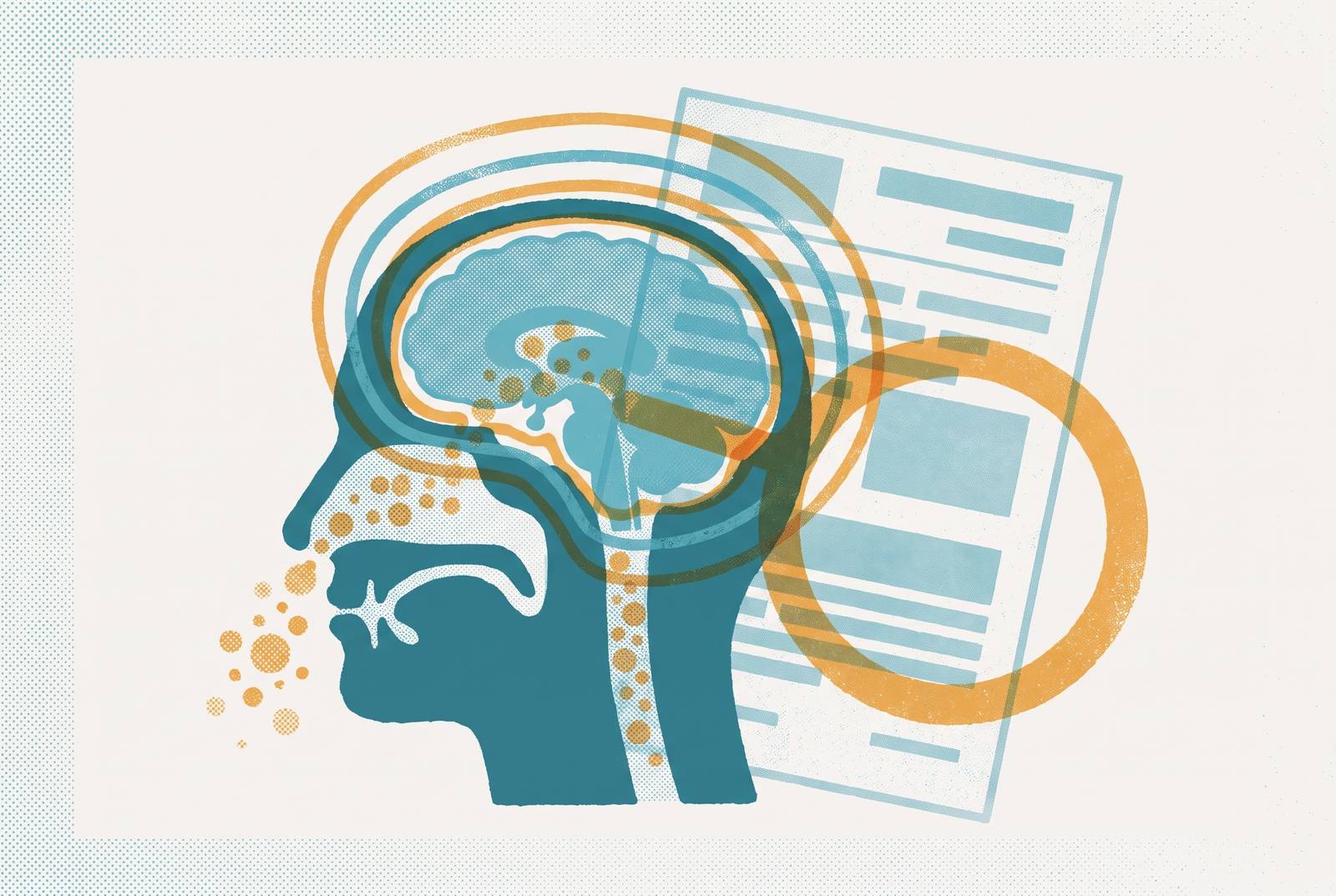
Nanoparticle nose-to-brain delivery for CNS peptide indications uses nasal nerve pathways to bypass the blood-brain barrier, while carriers protect peptides and prolong their residence on nasal mucosa. Reading a patent for this approach turns on one decisive question. How broadly and defensibly do its claims protect peptide treatment of CNS disorders beyond a particular formulation?
Why the blood-brain barrier makes CNS drug delivery a formulation problem, not a dosing problem
The blood-brain barrier is a structural filter that excludes nearly all macromolecules and most small molecules from entering the brain through systemic circulation. Peptide therapeutics therefore face an access problem before they face a dose problem. More drug does not necessarily mean more brain exposure. When barrier crossing fails, increasing systemic dosing can increase peripheral side effects without solving the delivery constraint.
Intranasal administration offers an anatomical bypass through the olfactory and trigeminal nerve pathways. But the route creates its own formulation problem. Proteolytic enzymes in nasal mucosa can degrade peptides before meaningful absorption occurs, while limited mucosal residence further restricts delivery. Nanoparticle carriers protect the cargo, prolong residence and can increase CNS bioavailability. Because delivery is the bottleneck, intellectual property that controls an effective delivery method can control access to therapeutic territory.
Why GLP-1 peptides and neurological indications are converging on this delivery problem right now
GLP-1 receptors are extensively expressed in mesolimbic and mesocortical pathways involved in reward, impulse control and addictive behavior. Within the CNS, GLP-1 signaling also modulates synaptic plasticity, neuroinflammation, insulin signaling and cellular energy management. The biological rationale extends beyond metabolic disease. These mechanisms explain why CNS delivery of GLP-1 peptides is a serious therapeutic hypothesis, rather than simply a new route for an established drug class.
WashU Medicine’s 2025 findings associated GLP-1RA drugs with significant reductions in seizure risk and addiction to alcohol, cannabis, stimulants and opioids. A large VA system study also linked GLP-1 medications to lower rates of neurocognitive disorders, including Alzheimer’s and dementia, and a lower risk of substance use disorder. Those associations do not establish treatment efficacy. Receptor activity in reward circuits and reduced neuroinflammation offer possible explanations, but neither establishes which patients would benefit from targeted delivery.
The clinical gap remains substantial. A 2025 meta-analysis found that GLP-1RAs did not improve cognition in Alzheimer’s disease. Ziyad Al-Aly, MD, noted at the Cardiometabolic Health Congress that early data are “not sufficient to establish an indication”. An olfactory nanoparticle program could help test whether enough CNS exposure changes that result, though better delivery has yet to be shown to explain it.
Why injectable GLP-1 therapy's dropout problem is structural, not incidental, and what it means for CNS indications
Among patients without type 2 diabetes, 64.8% stop GLP-1 treatment within the first year, while nearly half of patients with diabetes discontinue. Gastrointestinal effects, including nausea, vomiting and diarrhea, are the most frequently reported triggers, particularly early in therapy. Attrition is not just a patient behavior problem. It also shows how much a treatment asks of the person who has to keep taking it.
Trial tolerability does not fully capture that burden because randomized trials use pre-selected populations and undercount side-effect-driven dropout relative to real-world experience. Over longer periods, only a small fraction remain on therapy after three years. CNS populations introduce further difficulties. Dementia, addiction disorders and Parkinson’s can make lifelong self-administration especially fraught where executive function or needle tolerance is reduced. A delivery system that eliminates needles and reduces nausea could change who can sustain treatment, although an intranasal route alone does not establish that tolerability benefit.
This distinction gives CNS indication claims forward-looking commercial weight. Their value depends partly on whether a delivery program can make a plausible neurological treatment usable over time. The unmet need concerns both access to brain tissue and the practical conditions under which patients can remain treated.
What a nanoparticle olfactory delivery patent actually contains and how to navigate its structure
To evaluate that proposition, the reader must distinguish the patent’s scientific narrative from its legal boundaries. The specification describes the nanocarrier, its manufacture, delivery routes and disclosed indications. It supplies the description and teaching that support the claims. Disclosure is not the same as protection. An indication discussed in the specification is not necessarily covered by the claim language.
Independent claims stand alone and define the broadest claimed combinations, while dependent claims add limitations to claims from which they depend. Those narrower claims provide potential fallback positions and reveal which variations the applicant sought to protect specifically. The abstract and drawings offer quick orientation. They do not substitute for reading the claims, and the prosecution history adds the examiner’s objections and the applicant’s responses, including amendments that may affect scope.
Classification codes provide a separate navigation layer. A61K is the code for medicinal preparations, A61M is the code for delivery-device subject matter, and A61P is the code for therapeutic activity. An A61P classification can direct attention toward a CNS use, but only the actual claim language establishes whether that use is claimed and under what limitations.
How to read an independent claim for a nanoparticle olfactory delivery system step by step
The practical method begins by separating every distinct limitation in an independent claim. A typical claim may name the nanocarrier, the peptide cargo, the surface modification and the use or method. Each element restricts the claimed combination. The reader should then classify each limitation as formulation, delivery route or therapeutic use, rather than treating a dense claim as one indivisible description.
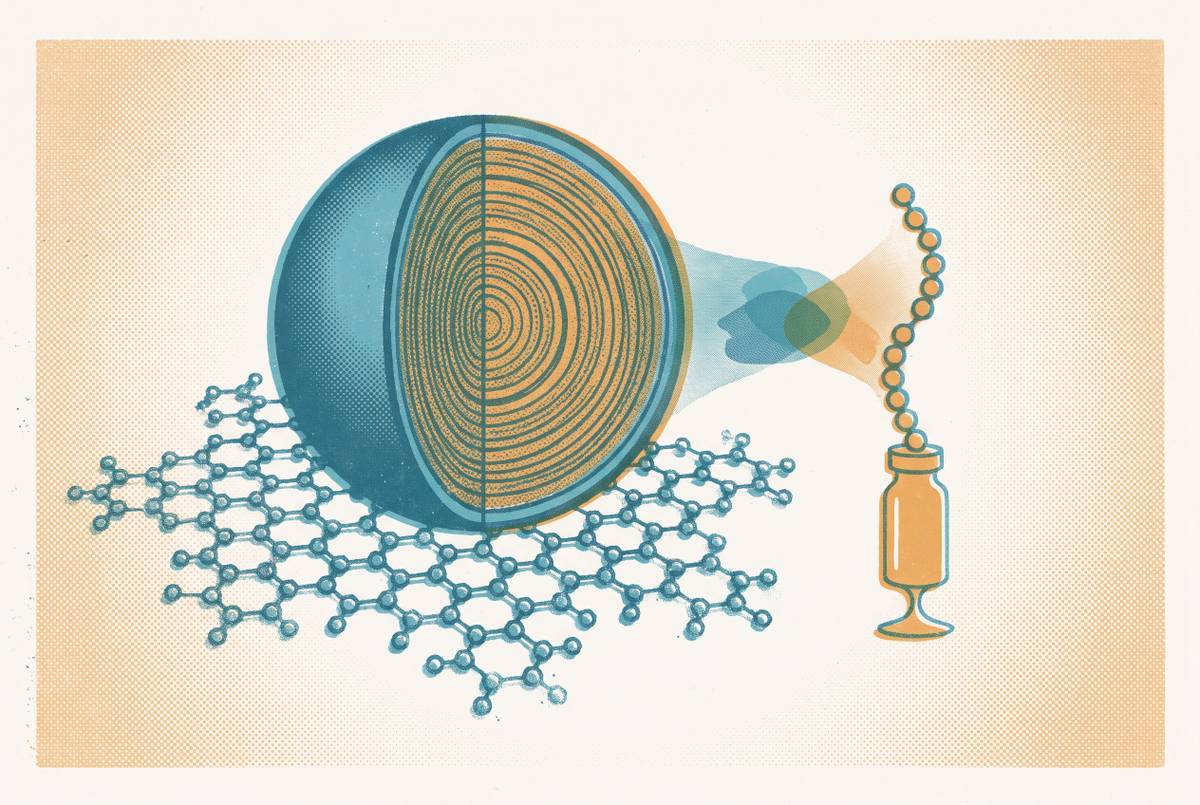
CN118021764A provides a concrete architectural example. Its described system uses chitosan-based nanoparticles surface-functionalized with TAT polypeptide and lactoferrin to deliver the CCR5 peptide antagonist DAPTA for treatment of cognitive dysfunction. Chitosan identifies the carrier, while TAT polypeptide and lactoferrin identify surface modifications. DAPTA specifies the peptide cargo, and cognitive dysfunction supplies the therapeutic destination. This description provides a parsing template for examining the publication’s independent claims.
A biodegradable-polymer limitation permits more carrier variation than a requirement for chitosan with a specified molecular-weight range. Likewise, a named peptide is narrower than a peptide class, and cognitive dysfunction is more specific than CNS disorders generally. The route must be checked separately. An olfactory delivery discussion in the specification does not establish that an independent claim expressly requires intranasal administration.
Finally, each limitation must be traced back to its support in the specification. What does the document describe, and what does it demonstrate? This separates readable claim language from defensible scope. It also prevents the worked example’s particular cargo and indication from being mistaken for protection of GLP-1 peptides or other neurological uses.
Why formulation claims are table stakes and therapeutic-use claims on CNS indications are the durable moat
Formulation claims are table stakes for this evaluation. They protect a defined composition or manufacturing approach, but their limits can leave room for a competitor to change the polymer, particle size or surface ligand. The therapeutic objective may remain untouched by that change. For long-term CNS indication strength, the decisive metric is therefore the scope of defensible therapeutic-use claims.
A broad therapeutic-use claim can address that design-around problem by covering treatment of a named disorder through intranasal peptide delivery without depending on one particular scaffold. The exact wording still controls the boundary. A use claim tied to the same narrow formulation does not become carrier-independent merely because it names dementia or addiction.
The A61P layer helps locate this therapeutic territory, where the moat requires claims connecting the route, cargo and indication at a breadth supported by the specification. Dependent claims can then protect narrower uses for each disorder.
How specification support and preclinical data determine whether a broad CNS claim will survive challenge
A specification claiming addiction, dementia and stroke must describe and enable the claimed uses, since their shared location in the CNS is not enough. Receptor expression provides a rationale for delivery, which still requires proof. In vitro permeability likewise does not demonstrate that an intranasally administered peptide reaches the relevant brain tissue in vivo.
MetP Pharma’s 2025 preclinical rat study showed brain-to-plasma ratios consistently greater than 1 for intranasally administered semaglutide using its platform. That is a concrete biodistribution result for a GLP-1 metabolic peptide. It does not by itself show that the treatment works across CNS disorders. Its value for patent evaluation is the distinction between a mechanism proposed on paper and measured preferential brain exposure.
Winterdahl et al.’s 2025 first-in-human PET study used [¹³N]-labeled oxytocin and detected brain uptake between 25 and 45 minutes in six volunteers. Brain concentrations were low and variable. The finding supports the possibility of human intranasal peptide delivery, but not therapeutic concentrations for another cargo. Similarly, intranasal esketamine’s approval for treatment-resistant depression provides regulatory precedent for intranasal CNS treatment.
The practical test is whether the specification shows the named cargo reaching the named brain region in a relevant animal model. Evidence for the disease must then link that exposure to the claimed use. Without that bridge, the claim remains vulnerable. A reader should treat missing biodistribution evidence as a gap in the asserted CNS property right.
How dependent-claim laddering creates or destroys the value of a CNS indication portfolio
Each dependent claim adds a limitation and keeps all the limitations of its parent. A narrower combination may stand even when an objection defeats the broader claim. Survival is not automatic, however, because each fallback still needs its own basis for validity and specification support.
An indication ladder can start with treating a neurological disorder through intranasal nanoparticle delivery and narrow to claims for addiction, dementia, Alzheimer’s disease, Parkinson’s disease and seizure disorders one by one. A cargo ladder can further specify GLP-1 peptides, GLP-1 receptor agonists or named analogs. Surface modifications add another dimension. The TAT polypeptide and lactoferrin features described for the Chinese example illustrate the kinds of targeting limitations a reader would look for, without establishing its actual claim dependencies.
The intersections determine what remains protected after narrowing. A combination of an indication and a cargo can still have value for licensing even if a broader neurological-use claim fails. By contrast, a ladder confined to particle size and polymer molecular weight offers only formulation fallbacks. Describing many CNS disorders elsewhere in the document does not repair that missing therapeutic architecture.
Portfolio development also depends on when supporting data become available. Continuation-in-part applications can add new subject matter and claims supported by later preclinical findings. Publication timing is therefore a strategic variable. A reader evaluating a family should distinguish the foundational disclosure from later evidence rather than assuming that every member supports the same therapeutic breadth.
The five questions to ask when evaluating any nanoparticle olfactory delivery patent for CNS indication strength
First, does an independent claim name a CNS indication by therapeutic category, or stop at the formulation? This establishes whether the patent claims therapeutic territory at all.
Second, does the specification support each named indication with in vivo biodistribution or pharmacokinetic evidence, rather than receptor biology and in vitro assays alone? The reader must also ask what that evidence actually demonstrates. Exposure and therapeutic efficacy are different findings. Evidence that shows only the delivery of another cargo should not count as support for a broad disease claim.
Third, does the dependent-claim ladder protect each of the CNS indications on its own? A single broad neurological claim concentrates risk in one position. Indication-specific fallbacks distribute that risk across narrower claimed combinations. Their usefulness depends on support for the named diseases.
Fourth, do dependent claims specify the peptide cargo class, including GLP-1 peptides or named analogs? The indication-and-cargo intersection identifies the treatment combinations the portfolio is built to defend. Generic drug language answers a different question. The reader should examine that intersection together with the route and formulation limitations it inherits.
Fifth, did prosecution narrow the elements that cover the formulation or those that cover the therapeutic use? The file wrapper can reveal concessions that change how the remaining language should be understood. That history completes the scope analysis. Applied in reverse, these five questions also expose gaps in a filing strategy before publication, turning patent reading into a method for designing defensible CNS protection.
Sources
- Chitosan-Based Nanoparticles for Nose-to-Brain Drug Delivery: A Real Path toward Effective CNS Therapy? - PMC
- Intranasal Nano-Delivery Systems: Emerging Strategies for Central Nervous System Disease Therapeutics - PMC
- Nanocarrier-based intranasal drug delivery for enhanced neurological disorders treatment
- Full article: Intranasal Nano-Delivery Systems: Emerging Strategies for Central Nervous System Disease Therapeutics
- Full article: A comprehensive insight of innovations and recent advancements in nanocarriers for nose-to-brain drug targeting
- Nose-to-Brain Drug Delivery
- Advancements in Nanocarrier Systems for Nose-to-Brain Drug Delivery
- Emerging Frontiers in GLP-1 Therapeutics: A Comprehensive Evidence Base (2025) - PMC