Thirty Years of Nanoparticle Foundation Research Converted Into Platform Chemistry Versus Formulation-First Biotechs Assembled Around a Single Peptide Indication
Carrier platforms keep their knowledge when a lead peptide changes.
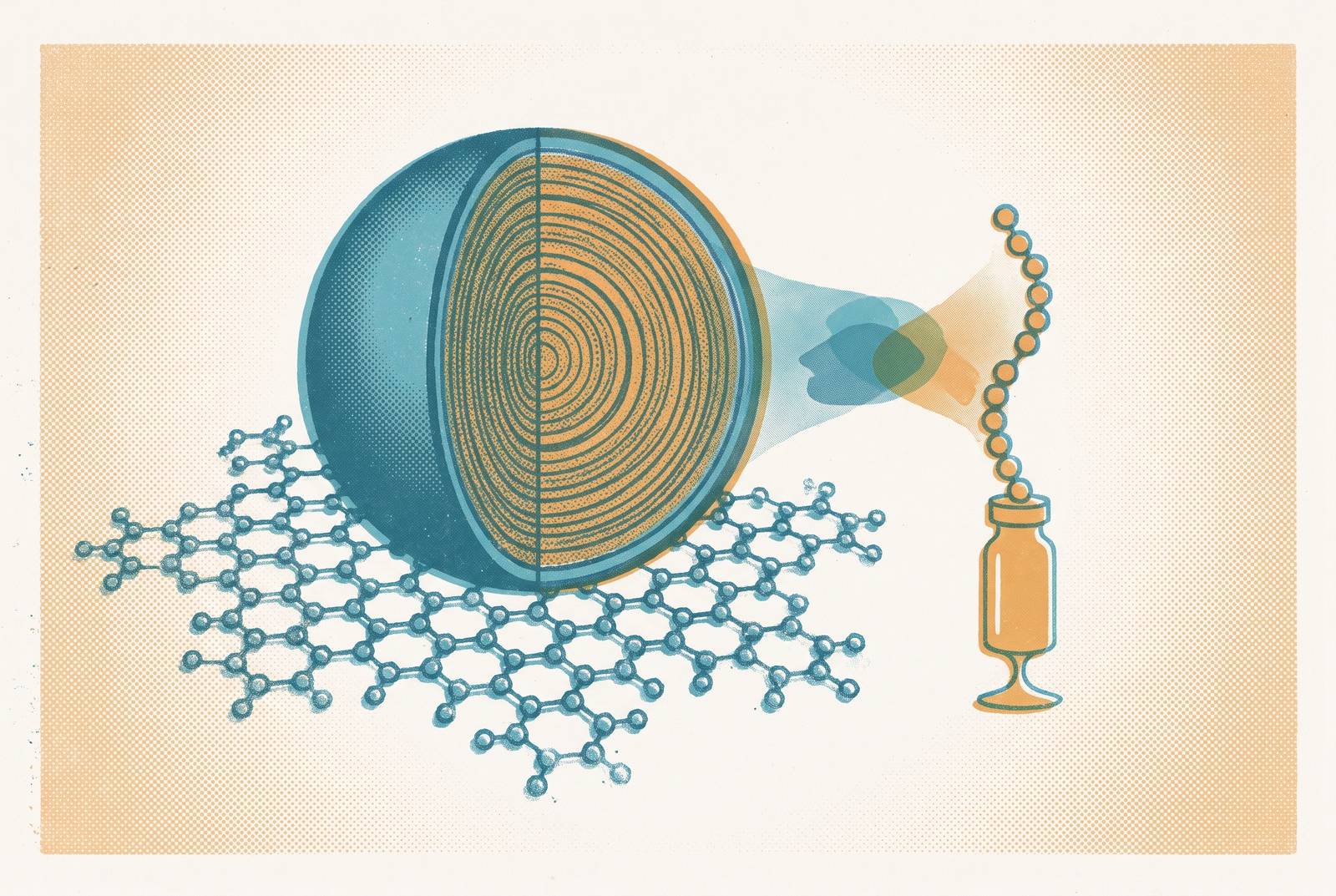
Thirty years of nanoparticle research can lead to a different kind of biotech from one built around a single peptide indication. A carrier platform starts with materials whose properties are already known and works toward individual formulations, while a formulation-first company starts with a molecule and works out how to deliver it. That distinction explains how knowledge can transfer across CNS-targeted peptide programs without making their biology interchangeable.
Why getting peptides into the brain is a delivery problem, not a molecule problem
The blood-brain barrier effectively excludes nearly all large biologics from the central nervous system. For a peptide intended to act in the brain, therapeutic promise therefore depends first on whether enough of it reaches its target. Delivery is the rate-limiting step in that argument. Systemic or oral dosing may need very high doses to reach therapeutic brain concentrations, which increases off-target toxicity. Raising the dose does not remove the barrier and can instead expose the limits of the delivery strategy.
Polymeric nanoparticles address this constraint by protecting peptide payloads, modulating release profiles, and potentially increasing drug concentrations in the CNS. The carrier does biological work beyond containing the molecule. Could peptide redesign remove the need for it? De novo redesign remains an open research problem, while most receptors on diverse brain cell types have no existing peptide binders. Surface functionalization of carriers also adds complexity, but carrier-based delivery has a regulatory path that does not depend on solving peptide redesign first.
What the olfactory route actually offers, and what it does not guarantee
The olfactory pathway offers a direct anatomical connection to the brain that bypasses the blood-brain barrier. Yet that connection is narrow and easily missed. The olfactory epithelium enables direct neuronal transport, whereas the respiratory epithelium primarily supports systemic absorption, with trigeminal pathways also contributing to CNS access. Treating the entire nasal cavity as one delivery surface obscures those differences. A dose entering the nose is not, by that fact alone, a dose delivered to the brain.
Transport involves both transcellular and extracellular mechanisms, with extracellular olfactory transport driving early brain exposure. Deposition in the upper nasal cavity can therefore be more consequential than molecular changes to the drug. Even then, the route requires direct evidence. Brain exposure after intranasal administration may also arise through systemic circulation, so systemic drug levels cannot serve as a surrogate for CNS delivery.
Winterdahl et al.’s 2025 PET study used [¹³N]-labeled oxytocin in healthy volunteers and found low, variable brain uptake after intranasal administration. The anterior nasal passage retained by far the largest fraction of the dose. Most of the dose missed the intended destination. This finding challenges the assumption that conventional spraying reliably achieves nasal-to-brain delivery. Conventional liquid nasal dosage forms have not closed the gaps in precise dosing and targeted CNS delivery, creating a specific problem for advanced formulations to solve.
Why device geometry is as much a formulation variable as polymer chemistry
The nasal cavity channels inhaled air downward and toward the esophagus, making deposition partly an aerodynamic problem. Drug from traditional sprayers or pumps is subjected to that natural movement. Residual air must be displaced to reach the olfactory epithelium in the upper nasal cavity. Chemistry alone cannot solve that physical problem. Even when a formulation has promising encapsulation and release properties, most of it can still land in the wrong region.
Devices built to avoid the natural downward movement of air can deliver most of the aerosolized drug to the upper nasal cavity. The same formulation in a standard pump will not achieve the same targeting. Without a matched device strategy, deposition variability can confound the relationship between carrier properties and observed exposure. That uncertainty can recur across every peptide program using the platform.
MetP Pharma provides a named example of why intranasal delivery must be evaluated as an integrated formulation problem. Its January 2026 preclinical semaglutide findings concern a particular molecule and formulation. They do not isolate a universal device advantage. The device needs to be part of formulation development, before the team reaches the packaging stage. Otherwise, a platform risks attributing to polymer chemistry an outcome partly determined by where the dose landed.
What PLGA's regulatory track record establishes about platform chemistry
PLGA offers a foundation for peptide delivery because of its biodegradability, biocompatibility, and flexibility in modulating drug release. PLGA microspheres have been used in long-acting injectable formulations for leuprolide acetate, allowing extended dosing intervals. The material has an established regulatory history. It is among the few biodegradable synthetic biomaterials in regulator-approved parenteral long-acting release products, with precedent across multiple peptide payloads.
That history establishes a starting position. Parenteral use does not itself establish intranasal safety or human brain delivery. The route and product still require evidence. Still, a team building a PLGA-based platform is working with a material class regulators have reviewed before, so the carrier is not entirely new to them. This distinction separates regulatory familiarity with the material from validation of a particular CNS program.
The pharmacological argument is similarly specific. Slow release through polymer degradation can extend the effective half-life of peptides that would otherwise clear quickly, without chemically modifying the peptide. In NPY studies, PLGA-encapsulated NPY was more effective than unencapsulated NPY, illustrating that encapsulation can alter pharmacological performance. That result supports studying the carrier as an active contributor to delivery, but it does not establish equal benefit for every peptide.
How platform chemistry and formulation-first assembly produce structurally different research programs
A platform-first research program characterizes carrier properties independently of any single payload. These include the degradation rate, particle size, surface chemistry, and encapsulation efficiency. The team still develops a formulation, but it adjusts parameters whose behavior is already partly understood. The team’s main task is to learn how the payload interacts with the carrier, with some knowledge of the carrier already in hand.
A formulation-first program begins with a chosen molecule and seeks a delivery solution suited to it. This direction can focus development tightly on one indication. Transfer to another molecule is not automatic, however. If the first candidate fails or the indication narrows, the delivery work may not answer the next candidate’s needs, leaving the team to determine anew how to deliver it. The distinction concerns what knowledge survives a change in the lead program.
Platform-first development also creates commitments that extend beyond the first formulation. Particle size distribution, polymer molecular weight, and surface functionalization decisions propagate through later programs. Early choices can constrain later payloads. A design optimized for one peptide’s size and charge may be less suitable for a larger or more hydrophilic peptide. Generalizability therefore depends on the range of carrier behavior characterized, rather than on calling a successful formulation a platform.
The 2026 preprint “Intranasal oxytocin mRNA-LNP can promote social behaviour and reduce pain” illustrates carrier reuse through a different strategy. It repurposed LNP chemistry by encoding oxytocin as mRNA expressed in nasal tissue. The carrier platform enabled the indication pivot. This preprint makes the direction of development concrete. Across NPY, oxytocin, orexin, insulin, and GLP-1 receptor agonists, a reusable carrier foundation can reduce repeated material discovery while leaving distinct physicochemical properties and brain targets to be studied.
Why each neuropeptide still requires its own formulation studies even within a platform
Oxytocin has been tested in over 100 clinical trials for autism and social behavior, yet large randomized controlled trials have failed to confirm social behavior improvements seen in smaller studies. Reliable delivery would answer only one question. Whether oxytocin produces the intended benefit remains separate, and the Winterdahl study shows that even establishing human brain delivery is nontrivial. A platform cannot convert an unresolved therapeutic hypothesis into an established one.
NPY presents a different set of questions. Preclinical rodent evidence supports its potential in PTSD and stress resilience, with intranasal NPY inhibiting anxiety-like and depressive-like behaviors, hyperarousal, and social interaction deficits. Sex differences complicate formulation development, however. NPY expression is significantly lower in females across brain regions involved in stress regulation, and females required a higher intranasal NPY concentration to inhibit depressive-like behavior. A formulation optimized in male rodents may therefore need adjustment for sex-balanced human trials.
Insulin and GLP-1 receptor agonists further distinguish delivery from regional targeting. A 2025 imaging study found that intranasal insulin reached memory-critical brain regions in older adults, but its deposition and release still need to be studied on their own because assumptions from NPY or oxytocin cannot be carried over. GLP-1 receptor agonists engage distributed cortical and subcortical systems. Intranasal dulaglutide in rodents accumulates preferentially in the hippocampus and neocortex, regions vulnerable in Alzheimer’s disease. Where it ends up depends on both receptor patterns and how the formulation behaves, with the carrier playing one part.
MetP Pharma’s rat data reported brain-to-plasma ratios greater than 1 for intranasal semaglutide. The finding remains specific to that formulation and molecule. It cannot automatically transfer to another GLP-1 analog, dose, or carrier, and each program requires its own preclinical pharmacokinetic characterization. A further limitation is the lack of standardized in vitro and in vivo models for determining exact transport mechanisms, which makes cross-peptide comparisons difficult even within one platform. Dedicated payload studies are therefore not a weakness in the platform model, but evidence that each indication is being treated on its own terms.
What accumulated carrier knowledge changes about how a research program is built and communicated
Decades of carrier research change the questions a team has already answered before a new peptide program begins. Known degradation kinetics under physiological conditions, encapsulation data across peptide sizes, and release behavior at different polymer molecular weights show the range in which teams already know how the carrier works. The new program begins within that range. A team without this foundation must generate those material data as part of its first formulation effort. Prior knowledge reduces the unknowns at the carrier level while leaving payload biology and route-specific performance open.
PLGA’s presence in regulator-approved parenteral products means the material class has been reviewed before, although a new intranasal formulation still faces its own safety and regulatory questions. Manufacturing scalability remains a challenge as well. What a platform team already knows about the carrier can help it work through these issues, though it still has to address them. Translation confidence rests on knowing which uncertainties have narrowed and which remain unresolved.
Biotech development has historically centered insurers and hospitals more than the people using medicines, but a formulation intended for daily intranasal administration brings practical questions forward. How does the device feel in the hand? How it opens and whether it fits into a routine become early design concerns, rather than questions deferred to a commercial team after approval. A platform that treats device geometry as a formulation variable has a reason to consider both deposition and usability from the beginning.
Claims about brain-targeted nasal nanoparticle programs need their stage attached, including whether they are preclinical, investigational, or not yet shown in humans. Rodent promise is not confirmed human delivery. The Winterdahl findings make that gap concrete, while also showing why better-characterized delivery systems remain a research priority. Even deep knowledge of a platform cannot guarantee success for any peptide indication, but when findings about the carrier apply across payloads, teams can draw on both failures and successes as they start the next program.
Sources
- Full article: Differential targeting of olfactory epithelium and respiratory epithelium in nose-to-brain drug delivery
- Expert Opinion on Drug Delivery
- The nasal route for nose-to-brain drug delivery: advanced nasal formulations for CNS disorders: Expert Opinion on Drug Delivery: Vol 22 , No 6 - Get Access
- The Nasal–Brain Drug Delivery Route: Mechanisms and Applications to Central Nervous System Diseases - Qiu - 2025 - MedComm - Wiley Online Library
- Full article: Intranasal Nano-Delivery Systems: Emerging Strategies for Central Nervous System Disease Therapeutics
- Nose-to-brain drug delivery: A new frontier in targeted therapeutics - PMC
- Nasal drug delivery device
- Intranasal Drug Delivery in Neuropharmacology: Advances in Brain-Targeted Therapies and Bioethical Challenges - PMC