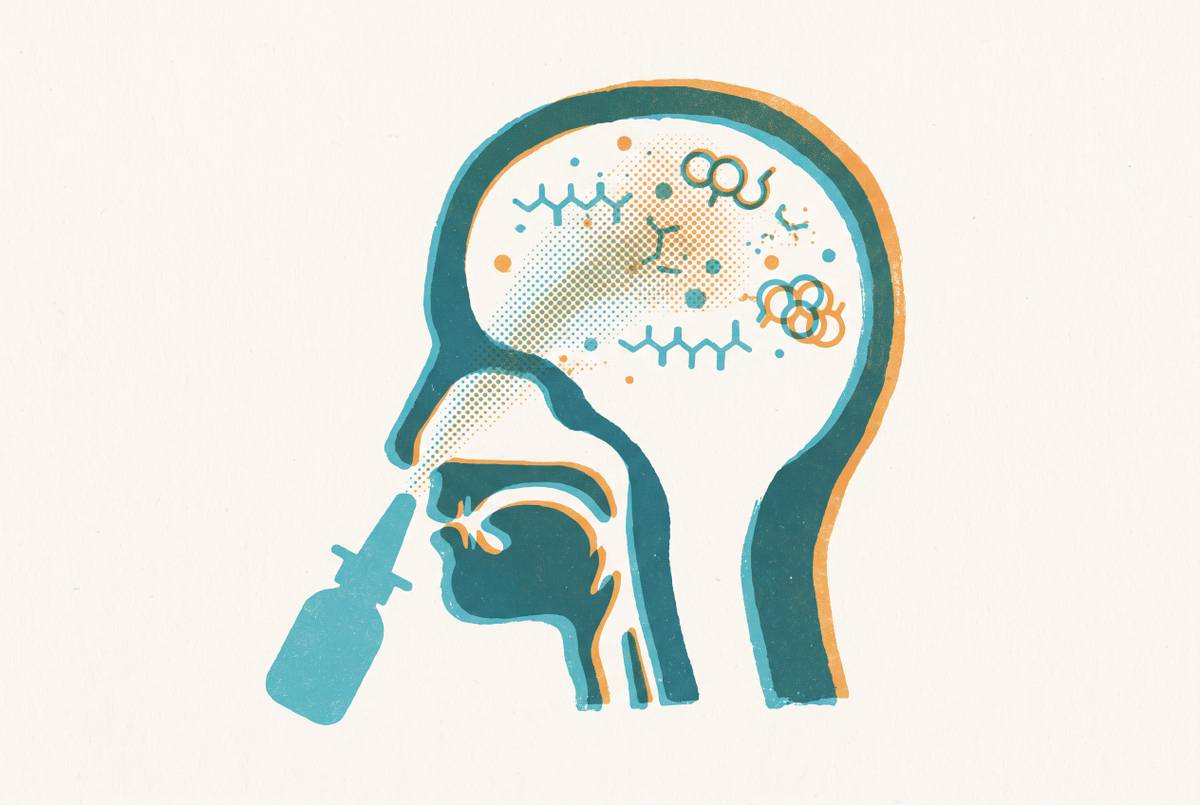
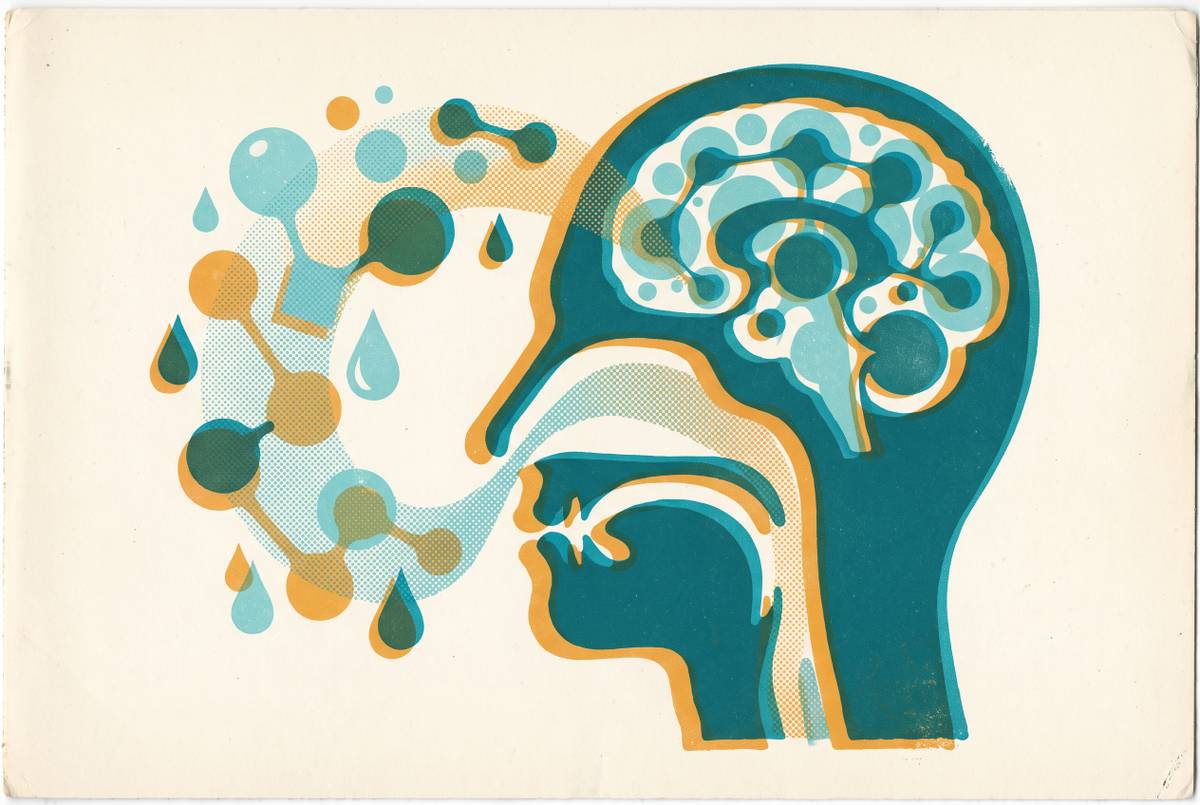
Trigeminal Nerve Pathway in Nose-to-Brain Drug Transport
Intranasal peptides reach the brainstem via trigeminal nerves, not blood vessels.
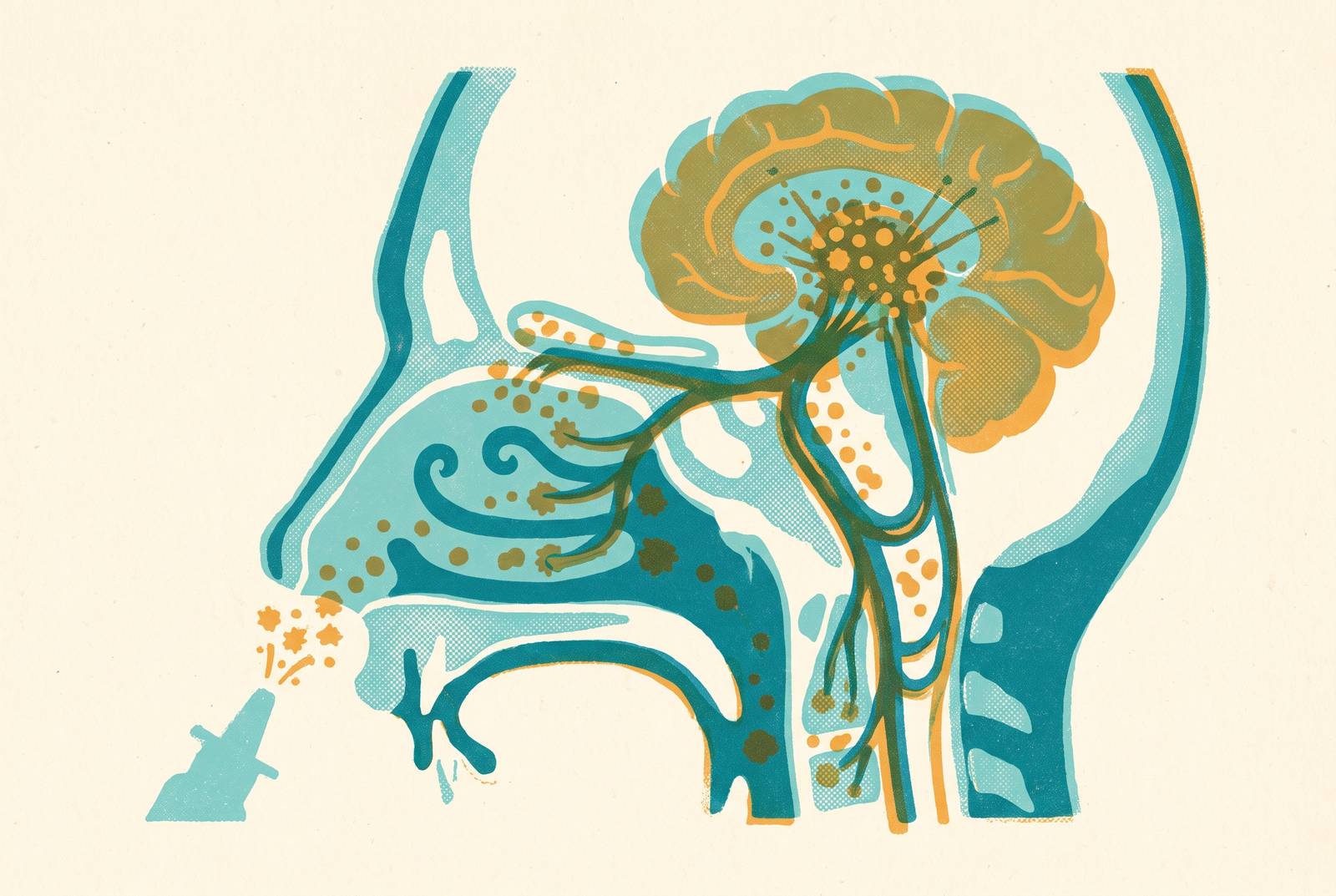
The trigeminal nerve pathway in nose-to-brain drug transport is an anatomically distinct route from the olfactory route to the brainstem and hindbrain, with different implications for where intranasal therapeutics go. That distinction matters when judging what nasal peptide delivery could achieve and what formulation work it needs to become a reliable treatment.
Why the blood-brain barrier makes injectable peptides structurally inadequate for CNS targets
The blood-brain barrier excludes most therapeutic peptides by design. Passive entry into brain parenchyma is largely limited to lipophilic small molecules that fall within a narrow molecular weight range. Most peptide drugs, including GLP-1 receptor agonists, lie outside that window because they are large, polar molecules. Subcutaneous administration puts these drugs into systemic circulation first, where they must survive enzymatic degradation before confronting the barrier. For neurological and reward-circuit targets that require adequate concentrations in brain tissue, this is a structural mismatch between the delivery route and the intended site of action. The rationale for intranasal CNS delivery is therefore not simply faster absorption, but access that avoids the vascular barrier.
How the nasal cavity connects directly to the brain through two anatomically distinct nerve routes
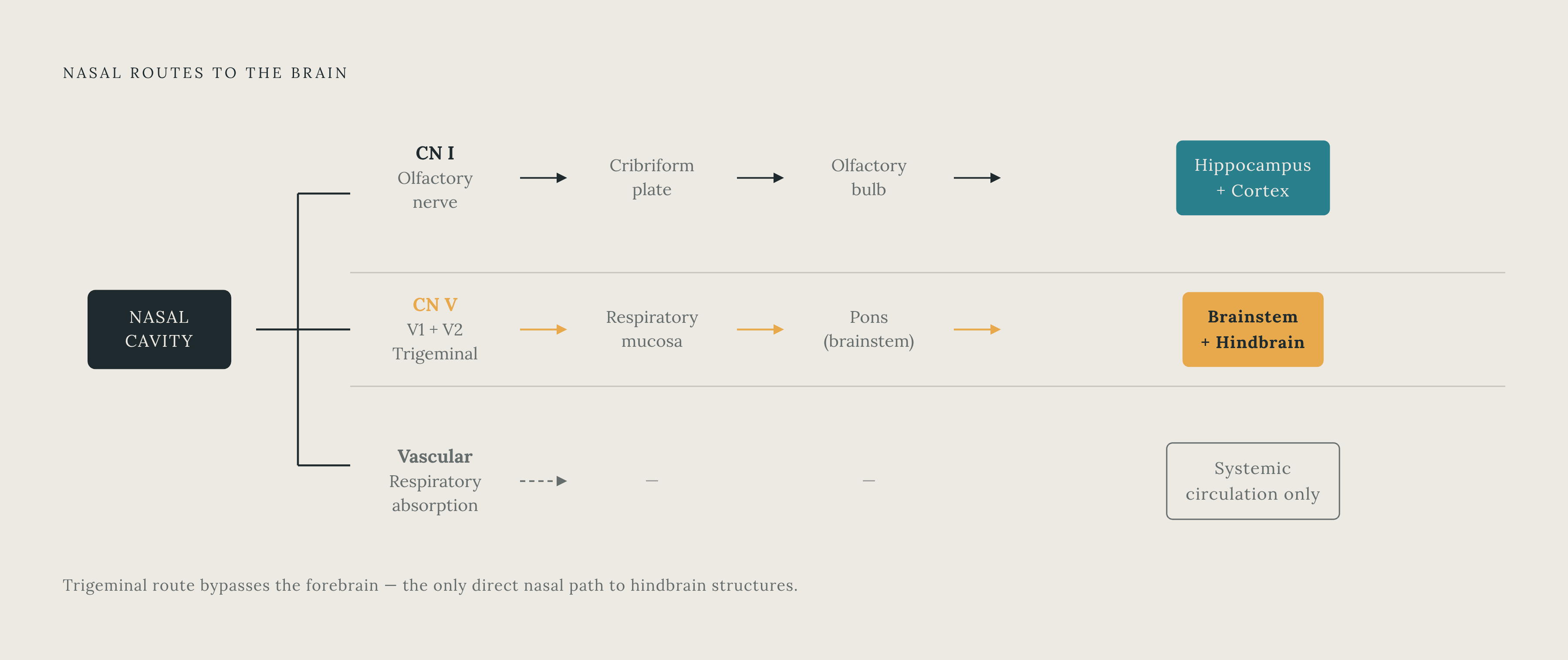
The nose offers that access through two cranial nerves with different connections. The olfactory nerve, CN I, runs from the olfactory epithelium in the upper nasal cavity through the cribriform plate to the olfactory bulb. From there, distribution proceeds toward the hippocampus and cortex. The trigeminal nerve, CN V, connects the broader respiratory mucosa to the brainstem at the level of the pons. The useful spatial distinction is therefore upper cavity to forebrain versus respiratory mucosa to brainstem and hindbrain.
That distinction rests on the branching anatomy of the trigeminal nerve. Its three branches are V1, the ophthalmic branch, V2, the maxillary branch, and V3, the mandibular branch. Only V1 and V2 send branches into the nasal epithelium. Both neural routes allow transport along or within nerve architecture rather than through the vascular walls that form the blood-brain barrier. A third route, the respiratory vascular pathway, takes absorbed drug into systemic circulation, so it does not lead straight to the CNS. It can complement neural transport, but nasal absorption into blood is not itself evidence of direct brain delivery.
Why the trigeminal nerve covers far more of the human nasal cavity than the olfactory epithelium does
The practical importance of the trigeminal route begins with the surface a nasal dose actually contacts. In humans, the olfactory epithelium occupies only a small fraction of the nasal surface. By contrast, the ophthalmic and maxillary branches form a dense network across the much broader respiratory epithelium. This is the mucosal surface that a conventional nasal spray reaches readily. Most of a deposited dose therefore encounters tissue served by trigeminal nerve endings rather than olfactory neurons, regardless of the formulation's intended route.
That contact does not establish how much drug completes the journey to the CNS. But it does call into question the view that olfactory transport must be the main route for human nose-to-brain delivery. Animal studies in which olfactory transport predominates may overestimate its contribution to human pharmacokinetics and underestimate the trigeminal contribution. The question for translation is whether the transport route responsible for a formulation reaching the brain in an animal model remains accessible under the anatomy and deposition conditions of the human nose.
The three transport mechanisms along the trigeminal pathway and why the extracellular perineural route dominates for peptides
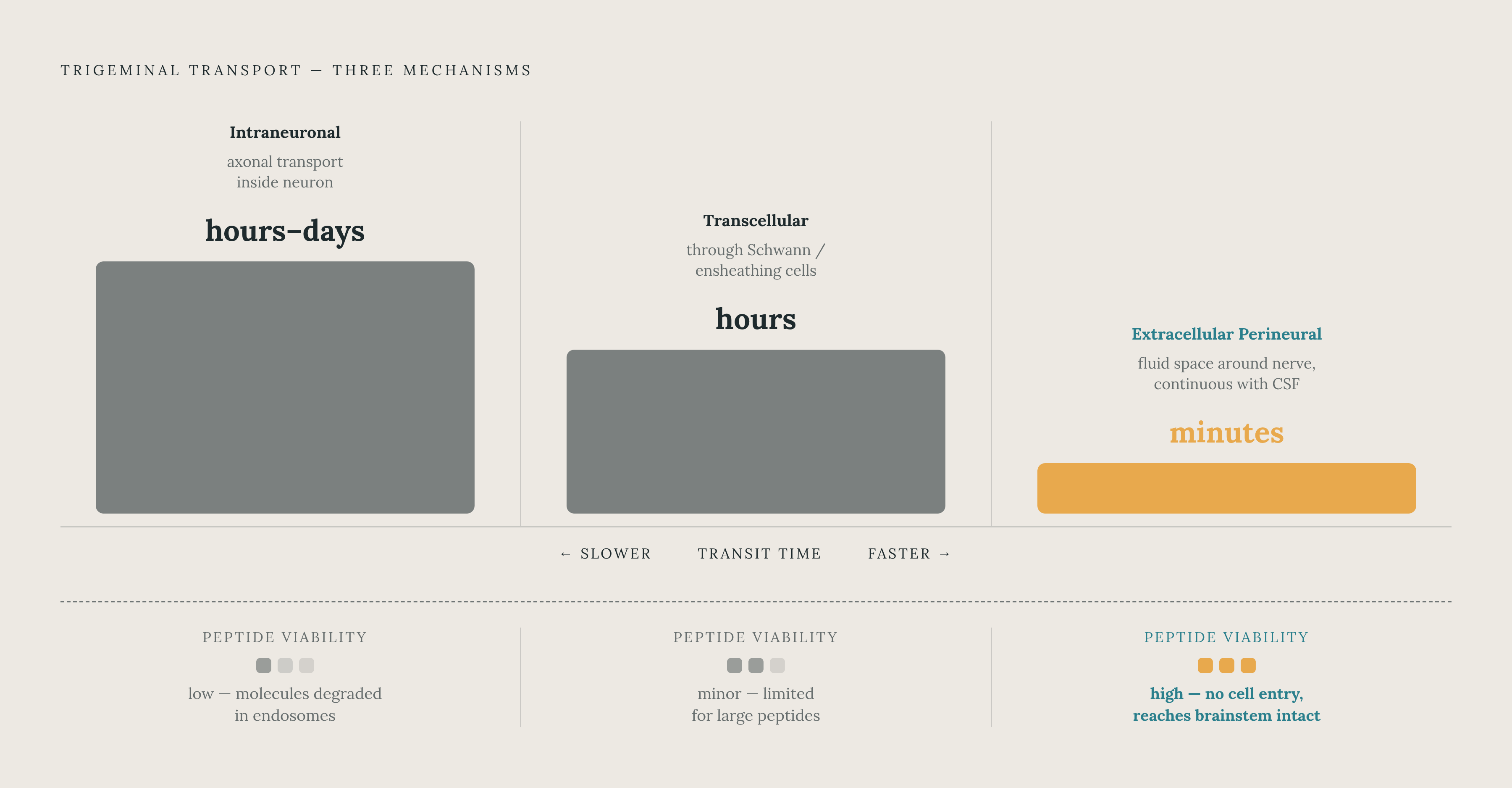
Once a molecule reaches trigeminal-associated tissue, it can travel by three distinct mechanisms, namely intraneuronal, extracellular perineural, and transcellular transport. Intraneuronal transport requires the neuron to internalize the drug through receptor-mediated or nonspecific uptake. The drug then travels toward the brainstem within the neuron, a process that takes hours to days. Transcellular transport instead passes through supporting cells, including Schwann or ensheathing cells. For most peptide drugs, this is a minor contributor rather than the main explanation for rapid CNS access.
Extracellular perineural transport provides a different physical route. Molecules move through the fluid-filled space around the nerve bundle, which connects to cerebrospinal fluid in the subarachnoid space. This continuous channel links the nasal mucosa to subarachnoid CSF without requiring the drug to enter and travel inside a neuron. Transport to the brainstem can therefore occur within minutes. For peptide-sized molecules, the combination of speed and an extracellular passage makes this the leading mechanism for rapid delivery. It also provides a testable distinction, because a signal arriving within minutes is more consistent with perineural movement than with slow axonal transport.
What direct evidence from PET imaging and preclinical models shows about trigeminal transport in practice
Winterdahl and colleagues (2025) used PET with [¹³N]-labeled oxytocin to follow intranasal peptide distribution in six healthy human volunteers. Brain uptake was detectable within tens of minutes after administration. The trigeminal ganglia also showed measurable signal consistent with transport involving the trigeminal nerve. This human proof of concept matters because it connects the anatomical argument to observed peptide distribution. Yet brain uptake was low and varied across individuals, so the study does not establish predictable delivery or fully characterize the pathway. Nor does a ganglion signal alone resolve every step between nasal deposition and brain exposure.
Akita et al. (2021) reported that a gut hormone derivative modified with a cell-penetrating peptide reached the trigeminal sensory nucleus within 3 minutes of intranasal dosing in mice. MetP Pharma's 2025 preclinical rat study used intranasal semaglutide with its proprietary nasal technology and produced brain-to-plasma ratios consistently greater than 1. Those ratios indicate preferential CNS over systemic exposure, in contrast to the distribution sought through subcutaneous administration. Together, rapid arrival and CNS-dominant exposure are consistent with extracellular perineural transport occurring in parallel with ongoing mucosal absorption. They support the mechanism, but neither finding substitutes for reproducible human pharmacokinetics.
What the trigeminal route can reach that the olfactory route cannot, and why brainstem access matters
The olfactory route leads toward the hippocampus and cortex, rather than directly into the brainstem structures associated with the pons and medulla. The trigeminal route supplies direct brainstem and hindbrain access that the olfactory route lacks and systemic injection does not reliably provide. That makes it relevant to autonomic regulation, addiction circuitry, and disorders with brainstem or hindbrain pathology. Proposed disease targets include Alzheimer's, Parkinson's, glioblastoma, and medulloblastoma, although anatomical access alone does not establish treatment efficacy.
GLP-1 receptors in the ventral tegmental area, nucleus accumbens, and prefrontal cortex make distribution into addiction-relevant circuits a meaningful research question. Brenipatide is in clinical trials for alcohol use disorder, opioid use disorder, smoking cessation relapse prevention, depression, schizophrenia, and bipolar disorder. These programs illustrate the broader neurological ambition of related peptide therapeutics, with trigeminal delivery still unproven. Nausea presents a more tentative application because it is partly mediated by brainstem nuclei, including the area postrema and nucleus tractus solitarius. Direct access could, in principle, support local anti-nausea modulation rather than nausea arising through systemic overstimulation. The anatomy supports investigating that hypothesis, but it does not show that brainstem-directed delivery will reduce this major cause of GLP-1 treatment dropout.
Why the failed Alzheimer's injection trials do not refute the nose-to-brain GLP-1 hypothesis
The strongest clinical objection is that GLP-1 drugs have not delivered convincing cognitive benefit in Alzheimer's disease. Two large clinical trials reported in late November and December 2025 failed to show that a GLP-1 drug slowed the course of the disease. A meta-analysis of 1,341 participants also found no improvement in memory and cognition compared with placebo, with low-certainty evidence. These negative findings still need to be taken seriously even if a different route looks promising.
However, a negative trial does not by itself distinguish an ineffective biological target from inadequate drug exposure at that target. Subcutaneous GLP-1 agonists must still cross the blood-brain barrier to act within brain parenchyma. Failed delivery is therefore a plausible explanation for disappointing results, but it is not a proven explanation. Until drug exposure is known, the trials cannot settle whether better CNS delivery would change the result. Equally, the delivery caveat cannot be used to claim that the underlying biology has already been validated in humans.
In animal models, GLP-1 receptor agonists reduce amyloid-β and tau pathology, decrease neuroinflammation through microglial modulation, and enhance synaptic plasticity. A 2025 analysis of hundreds of thousands of adults with type 2 diabetes found that rates of all-cause dementia and Alzheimer's disease were significantly lower in those who used GLP-1 receptor agonists. These associations and preclinical effects support plausibility while leaving cognitive improvement uncertain. Findings that liraglutide may enhance brain glucose metabolism also leave that clinical question unresolved. Intranasal delivery deserves a proper test to see whether getting more drug to the target can turn these biological effects into a benefit.
The formulation obstacles that prevent the trigeminal pathway from being used at its theoretical capacity
Such a test requires more than putting an injectable peptide into a nasal spray. Mucociliary clearance removes most of the deposited material within minutes, so there is little time for absorption. Peptides are also enzymatically labile on the nasal mucosa and may degrade before absorption. These losses occur before nerve transport can begin, so an accessible pathway can coexist with poor bioavailability. The distinction is between the capacity of the anatomy and the fraction of a dose that a formulation makes available to it.
Deposition adds another constraint because standard sprays do not reliably reach the upper nasal recess even when the olfactory region is their intended target. Bidirectional nasal sprays and precision olfactory delivery technology have been developed to improve deposition efficiency, while standard spray devices remain the clinical norm. Particle size, surface modification, mucoadhesion, and formulation properties also need optimization, which a simple solution spray does not provide. Preclinical intranasal polymeric nanoparticle delivery of levodopa improved bioavailability to 45.20% compared with conventional intranasal solutions. That result shows that a formulation improved delivery, but it does not show that every peptide or use in humans will do as well.
How nanocarrier platforms address trigeminal-route delivery barriers and what they add beyond simple penetration
Liposomes and polymeric nanoparticles protect drugs against enzymatic degradation on the nasal mucosa and improve mucosal uptake. Mucoadhesive coatings extend contact with the epithelium beyond the usual mucociliary clearance window, lengthening the opportunity for absorption. These functions do more than increase penetration. They preserve the payload and keep it at the surface where uptake can occur.
Surface functionalization adds a more selective layer to that design. Targeting ligands, including peptides or antibodies, can enable receptor-mediated transcytosis and improve uptake at trigeminal nerve endings. Particle size also influences which transport mechanism predominates, with smaller particles favoring extracellular perineural transport. Deep, IP-backed nanoparticle expertise matters because serious delivery programs must coordinate protection, residence time, uptake, and onward transport rather than treat nasal deposition as the finished solution.
That logic can extend beyond a single GLP-1 peptide. In principle, the same delivery architecture can support other peptide therapeutics, nucleic acids, or gene-editing payloads through the trigeminal route. Landmark Medicines Ltd. (UK) announced in September 2026 that it plans to bring its proprietary nasal drug-delivery platform closer to a human volunteer study, starting with GLP-1 receptor agonists. These plans are a step toward human testing, but they do not show that the treatment works. The remaining translational gap is whether a designed formulation can produce reliable exposure in the intended human brain regions and whether that exposure produces benefit. The trigeminal pathway gives that work a distinct anatomical foundation, but only the delivery and clinical evidence can complete the argument.
Sources
- The Nasal–Brain Drug Delivery Route: Mechanisms and Applications to Central Nervous System Diseases - Qiu - 2025 - MedComm - Wiley Online Library
- Intranasal drug delivery: Unlocking the nose-to-brain route for central nervous system therapies - ScienceDirect
- Intranasal delivery of therapeutics to degenerating brain regions: From pathways to nanocarriers - ScienceDirect
- Nose-to-brain drug delivery: from bench to bedside
- Nose-to-brain drug delivery: from bench to bedside
- The Nasal–Brain Drug Delivery Route: Mechanisms and Applications to Central Nervous System Diseases
- Advancements in Nanocarrier Systems for Nose-to-Brain Drug Delivery
- Intranasal delivery of glucagon-like peptide-1 to the brain for obesity treatment: opportunities and challenges: Expert Opinion on Drug Delivery: Vol 21 , No 7 - Get Access