Intranasal Delivery Companies Working on Nose-to-Brain Biologics
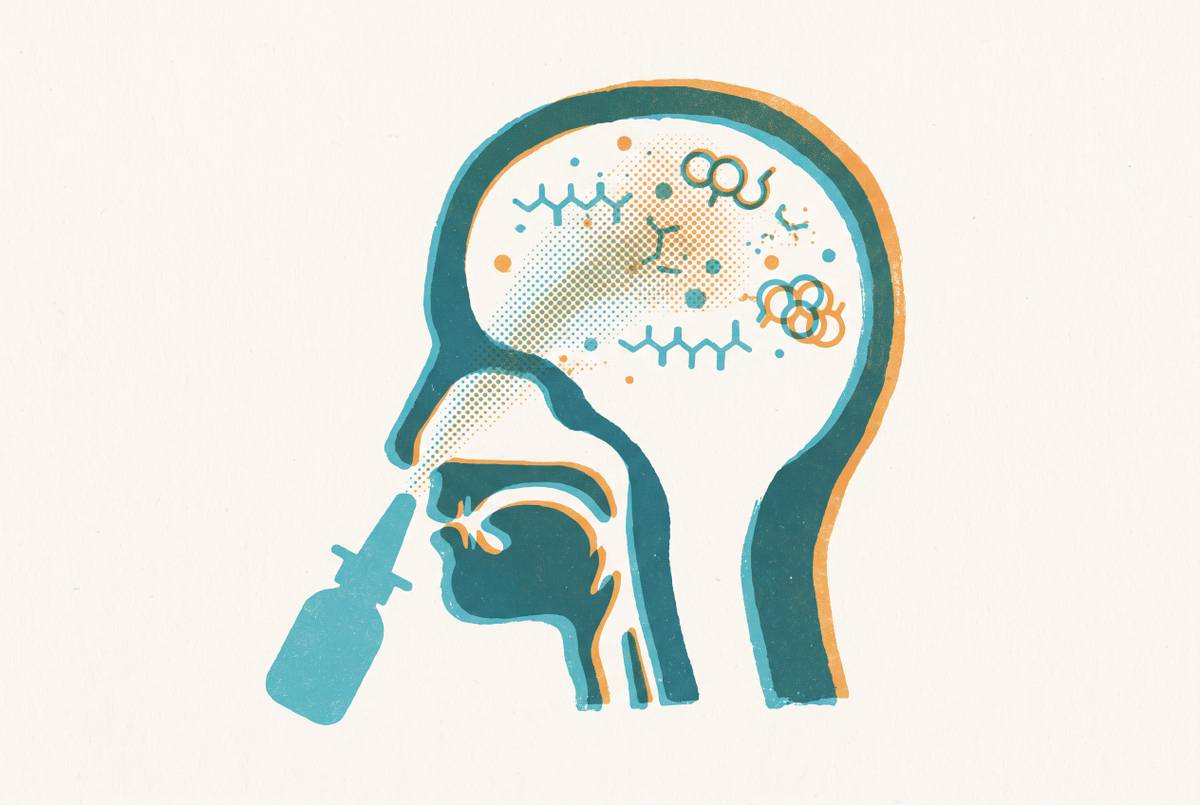
Companies bypass the blood-brain barrier by delivering drugs directly through the nose to the brain.
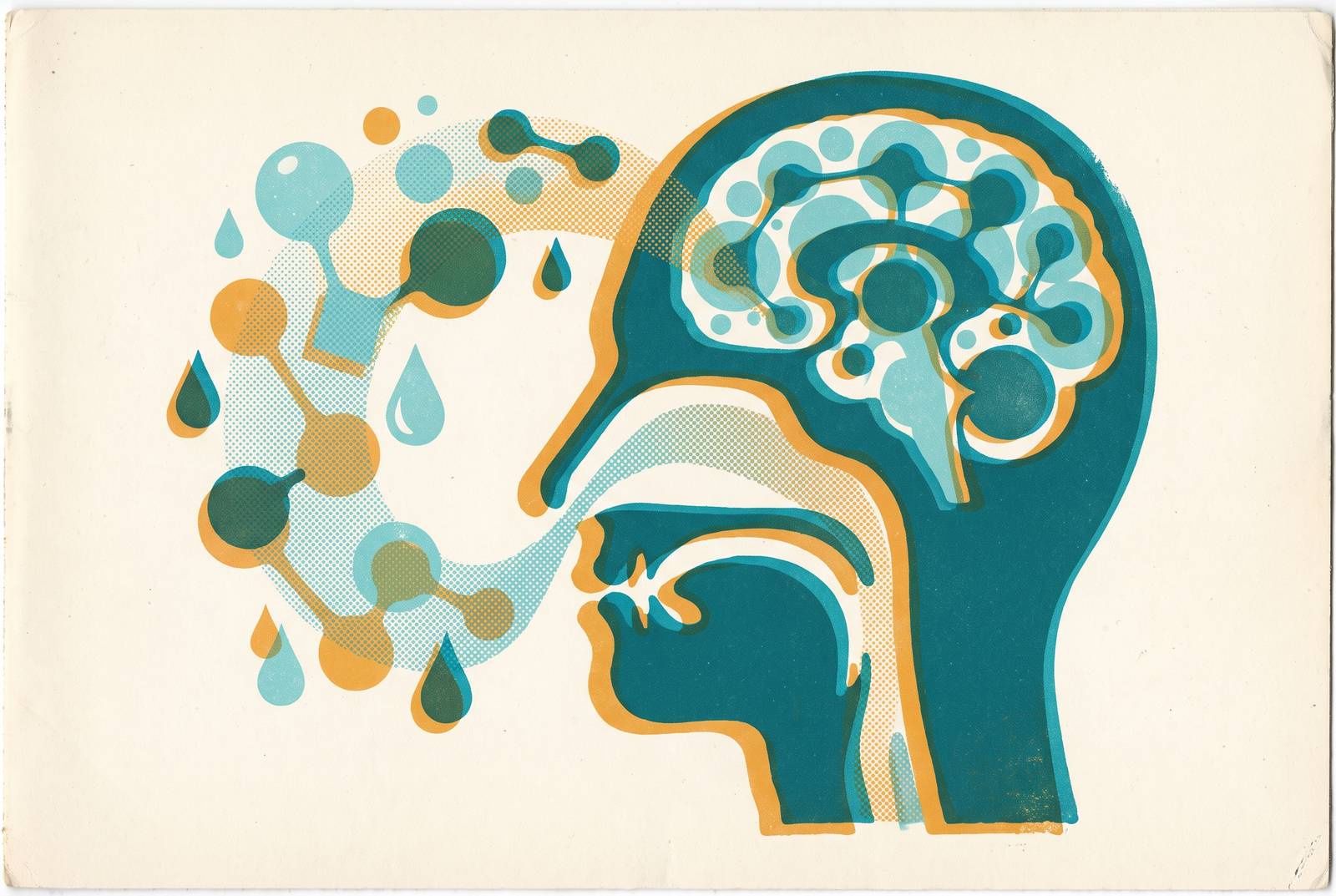
Delivering biologics to the brain by injection or pill runs into a wall the body built on purpose: the blood-brain barrier.
Why the blood-brain barrier makes biologic delivery to the brain genuinely hard
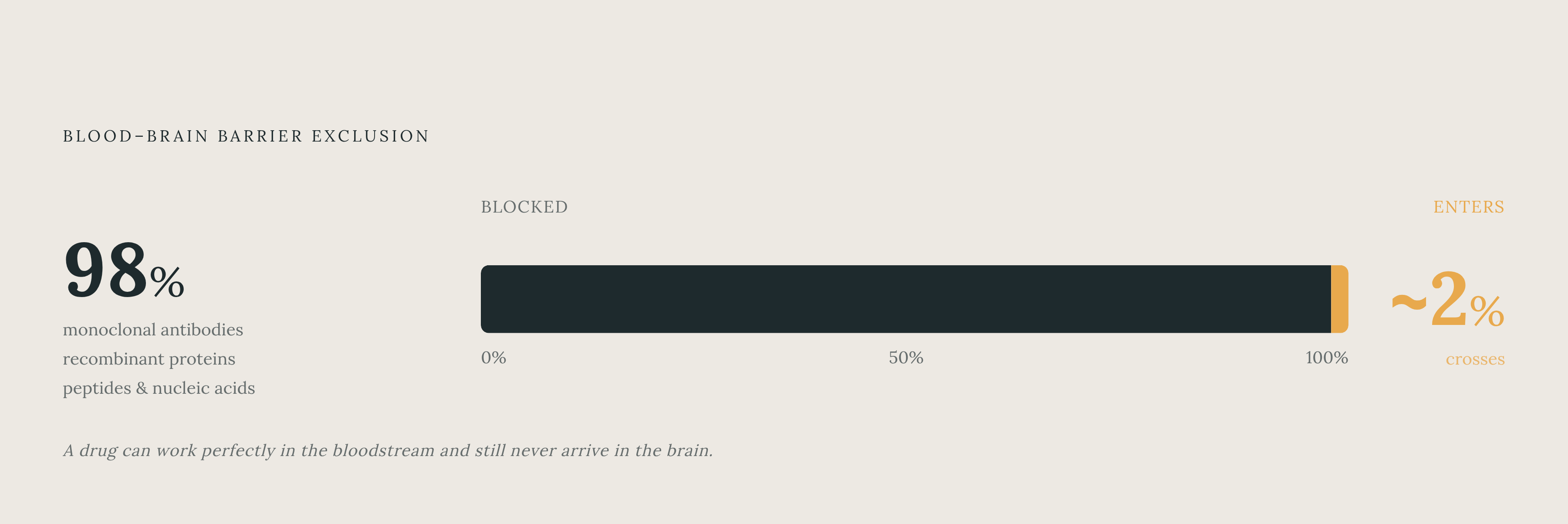
The blood-brain barrier is not an inconvenience that better dosing can overcome. A peer-reviewed review in the International Journal of Nanomedicine, published in May 2025, puts a number on this: roughly 98% of macromolecules are excluded from crossing into the brain. Biologics do not share that advantage. Monoclonal antibodies, recombinant proteins, peptides, and nucleic acid therapies are defined by exactly the properties that make crossing nearly impossible: high molecular weight and structural complexity that collapses transmembrane permeability toward zero.
The blood-brain barrier does not work alone. Workarounds exist (direct intracerebral injection, for instance) but they require a needle into the skull, and that is not a plan for a patient who needs repeated dosing over years, particularly an elderly patient managing a chronic neurodegenerative condition.
The consequence of this barrier is structural. A biologic can perform exactly as designed in the bloodstream, in the liver, in peripheral tissue, and still produce little or no effect in the brain at any systemic dose a patient can tolerate. It simply never arrives. That distinction, between a drug that doesn't work and a drug that never reaches its target, is the starting condition for everything that follows in nose-to-brain delivery science.
How the nasal anatomy creates a direct physical route to the brain
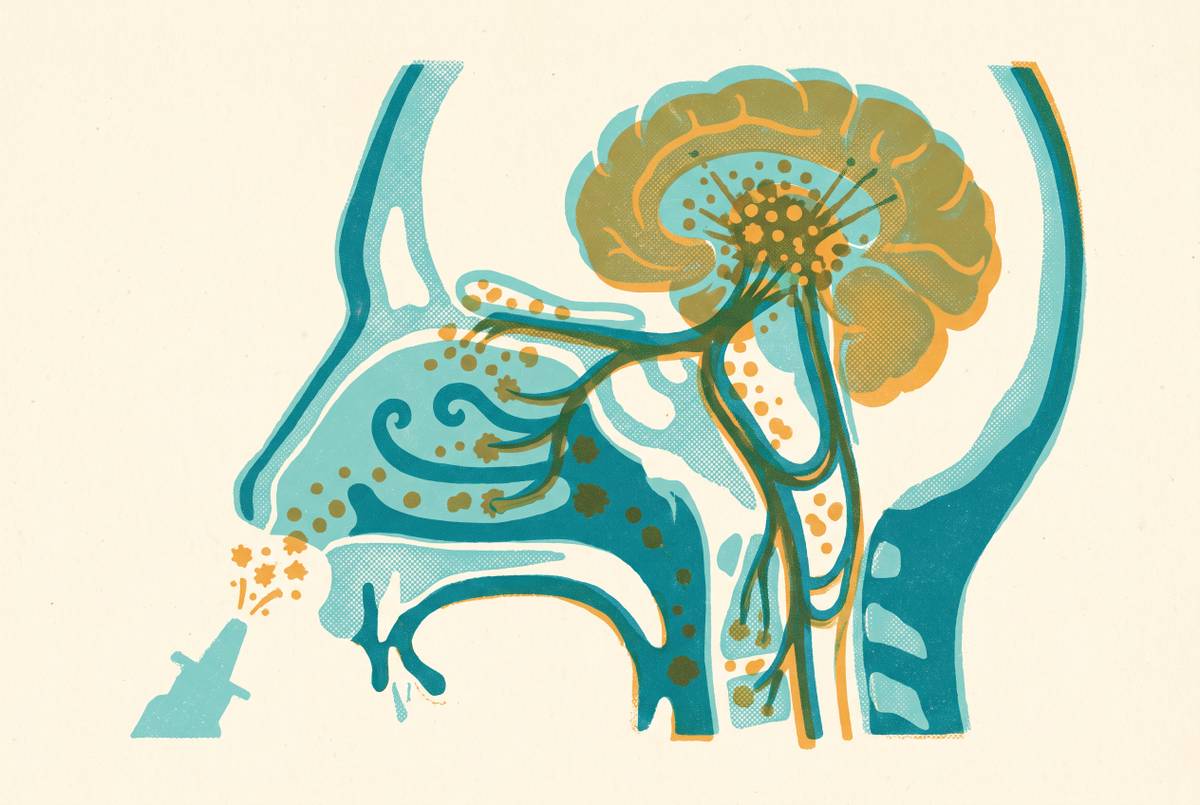
The nasal cavity offers something no injection, pill, or intravenous line can replicate: a physical shortcut that bypasses the blood-brain barrier through direct neuronal wiring.
The olfactory pathway runs from the nasal epithelium to the olfactory bulb and from there into cortical regions of the brain. A June 2026 review in the International Journal of Pharmaceutics: X identifies both pathways as the mechanism that lets intranasal delivery bypass the blood-brain barrier while also enabling systemic absorption in cases where that is useful too.
Set against the two conventional delivery routes, the advantages compound. Intranasal delivery sidesteps both failure points: it skips gut and liver metabolism the way injection does, and it skips the blood-brain barrier the way nothing else can, because the neuronal pathway was never blood-borne to begin with. Drug administered intranasally can appear in cerebral tissue within minutes via this neuronal transport, a speed for large molecules that no systemic route can match.
Once platform engineering enters the picture, the distinction between the olfactory and trigeminal pathways, intact carrier versus released cargo, becomes a design decision, not a footnote. The pathway a formulation is built to engage shapes nearly every choice that comes after it.
What the nasal mucosa does to biologics before they reach those pathways
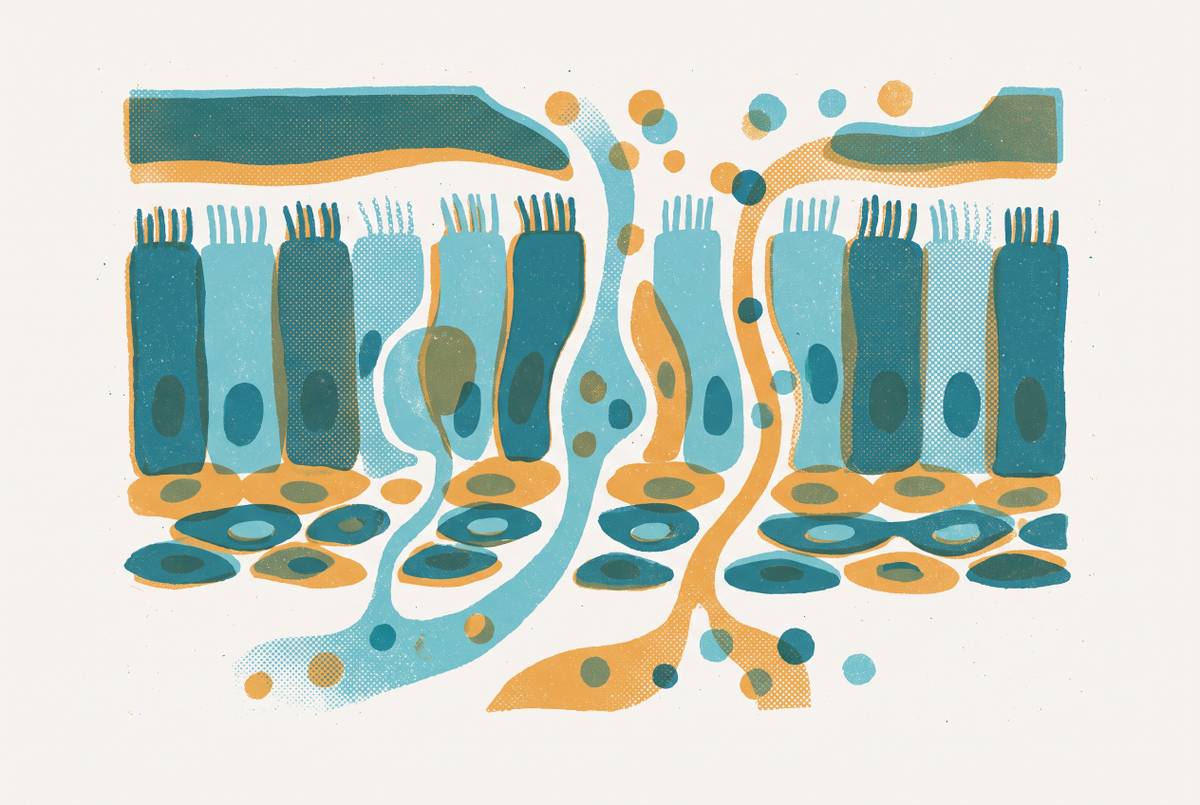
The same nasal tissue that offers access to the olfactory and trigeminal nerves is also actively hostile to the biologics trying to use it. Anatomy provides the opportunity. The mucosa provides the resistance. A drug molecule has to survive three layered defenses before it can reach a nerve fiber.
Mucociliary clearance comes first: this is the nose's standing defense mechanism, and it sweeps mucus and whatever it contains toward the throat continuously. The third is the epithelium itself. Tight junctions between epithelial cells restrict paracellular passage of large molecules, and without a carrier to assist transcellular uptake, macromolecules have limited means of crossing the epithelial layer.
The June 2026 International Journal of Pharmaceutics: X review names rapid mucociliary clearance and poor patient adherence to intranasal medications among the persistent challenges still limiting clinical use, even as formulation science improves elsewhere. So the short residence window and inconsistent patient dosing behavior mean you need more than the anatomical opportunity described above; it is necessary, but it falls far short of sufficient.
The engineering implication follows directly: residence time and mucosal penetration have to be solved before brain targeting becomes a relevant question. The mucosal barrier has three distinct failure modes, clearance, enzymatic attack, and epithelial exclusion, and different companies and research groups have built different tools to answer each one.
The platform approaches the field is converging on
No single technology solves mucosal drug delivery, because biologics face multiple independent barriers: retention, permeation, targeting, and stability. The platform approaches now active in the field divide along the lines of which dimension they target, and the choice of platform shapes which biologics can be carried and which brain regions they can reach.
Nanoparticle-based carriers represent the dominant preclinical strategy for peptide and macromolecular biologics. A King's College London study published in July 2025 applied this gold nanorod approach to acyl-ghrelin, a 28-amino acid gut peptide with neuroprotective properties, demonstrating that the carrier technology generalizes beyond any single molecule. The trigeminal and olfactory pathways interact with these carriers differently: the trigeminal pathway preferentially transports intact nanoparticles, while the olfactory pathway tends to receive drug already released from its carrier. Because of that difference, nanoparticle design decisions, how tightly the cargo binds to its carrier and when it releases, determine which anatomical route actually gets engaged.
Formulation adjuncts make up a second strategy, working alongside or independent of nanoparticle carriers. An International Journal of Pharmaceutics: X review identifies in situ gelling systems and permeation enhancers as two of the three formulation technology classes (alongside nanoparticles) that have meaningfully improved drug retention, bioavailability, and targeted delivery in recent research. Permeation enhancers take a different approach, transiently loosening the tight junctions between epithelial cells to let more drug cross paracellularly.
A third approach abandons the premise that the drug needs to reach the brain. Vistagen's SEC filing describes five clinical-stage candidates, each built around a distinct mechanism of action, with positive clinical data reported in their targeted indications, which include social anxiety disorder, major depressive disorder, and vasomotor symptoms associated with menopause.
The contrast between nanoparticle delivery and the pherine approach is the sharpest conceptual split in the field. One strategy transports cargo across a barrier. The other triggers a response at the barrier's surface and never asks the drug to cross. Neither is a more advanced version of the other. They are different answers to the question of what "delivery" needs to accomplish.
How device technology determines where a formulation reaches in the nasal cavity
Formulation chemistry and delivery hardware are inseparable in practice. A nanoparticle engineered precisely for olfactory uptake accomplishes nothing if the spray device that delivers it deposits the dose at the front of the nostril instead of the upper posterior cavity where the olfactory epithelium actually sits. That region is not reached reliably by a standard nasal spray, and reaching it requires deliberate deposition geometry built into the device itself.
The June 2026 International Journal of Pharmaceutics: X review identifies bidirectional nasal sprays and precision olfactory delivery (POD) technology as next-generation devices built specifically to improve deposition efficiency in that targeted region. Zeteo Biomedical launched its ZTech-P CygnusMR and CygnusSDX delivery devices in February 2025, built for precise, metered-unit dosing of dry powder drugs and biologics through both systemic nasal and nose-to-brain administration, offering a needle-free option for pharmaceutical developers bringing nasal combination products to market.
Large delivery-system companies are placing their own bets at this device layer. Aptar Pharma's acquisition of technology assets from SipNose in October 2024 was built explicitly around expanding its intranasal portfolio toward nose-to-brain and CNS applications. Aptar's FY2025 Annual Report notes a growing number of systemic nasal drug delivery projects across its pipeline, along with rising participation in injectable projects, including work tied to GLP-1s and Annex1.
A regulatory precedent already shows that the device-plus-formulation model can clear FDA review and reach patients at scale. What it confirms is narrower but still significant: regulators will approve an intranasal CNS drug built on a dedicated device, and the commercial infrastructure to support one at scale already exists.
Where clinical programs stand now
The clinical pipeline for intranasal biologics is still early, but two therapeutic bets show where developers think the science is ready to move from the lab bench toward patients.
Neurotrauma is the field's first concrete clinical test. The platform is built for rapid onset and targeted brain biodistribution, so it bypasses systemic circulation along the way. Oragenics reported in its Q2 2025 shareholder update that it secured Human Research Ethics Committee approval in Australia, appointed Southern Star Research as contract research organization, and signed a cGMP manufacturing agreement with Sterling Pharma Solutions. Oragenics has also said its intranasal device could extend beyond concussion into acute neurological emergencies and chronic neurodegenerative disease, if the underlying platform proves out.
GLP-1 is the field's highest-stakes commercial target, and the case for an intranasal route here is grounded in biology. Targeting the brain's own GLP-1 receptors through the olfactory and trigeminal pathways addresses both problems directly, and that is why GLP-1 has become a central thread in the nose-to-brain conversation.
Why GLP-1 neurobiology makes the nose-to-brain route scientifically compelling
GLP-1 receptors are not confined to the pancreas or the gut. Intranasal GLP-1 delivery is therefore not simply a gentler way to avoid injection site reactions. It targets a receptor system spread across the brain, and peripheral injection may never saturate that system at the CNS level, no matter how well it controls blood glucose or body weight systemically.
Activating those CNS receptors produces effects that peripheral dosing alone does not reliably reach. In models of neuroinflammation, the same drug class promotes remyelination, shifts microglia toward an anti-inflammatory phenotype, supports oligodendrocyte precursor differentiation, and aids axonal regeneration. These are not marginal effects confined to a single pathway. They touch several of the processes implicated in neurodegenerative disease.
The observational picture in dementia points in the same direction. Real-world studies spanning hundreds of thousands of individuals with diabetes have associated GLP-1 receptor agonist use with meaningfully lower dementia incidence, and meta-analyses of randomized trials have found lower odds of dementia associated with GLP-1 agonist use as well. These findings come from systemic exposure in large populations, not from controlled trials of CNS-targeted delivery, and that distinction matters enormously for what comes next.
The EVOKE Trial and the CNS Concentration Problem
The EVOKE trials, presented in December 2025, tested oral semaglutide against Alzheimer's disease progression in a large controlled setting, and the drug did not significantly slow the disease. A 2025 meta-analysis of fifteen randomized controlled trials reached a consistent conclusion: GLP-1 receptor agonists did not improve memory or cognition in Alzheimer's disease compared with placebo, though the evidence behind that finding was characterized as low-certainty.
What should a reader make of a null result sitting next to the receptor biology described above? If a trial fails under those conditions, that points to a delivery ceiling more than a receptor ceiling.
That generates a specific, testable hypothesis rather than a settled conclusion: subcutaneous GLP-1 may produce strong peripheral effects on weight and glucose while leaving the brain itself under-dosed, a concentration gap that a nose-to-brain platform would address directly by delivering peptide through the olfactory and trigeminal routes. Read this way, EVOKE becomes evidence for the intranasal approach. If the receptor biology is sound and a controlled trial still comes back null, the most parsimonious explanation on the table is that the drug never reached the tissue in question, a formulation and delivery problem. That remains a hypothesis, not a demonstrated fact. No direct human trial of intranasal GLP-1 delivery to the brain has yet tested it.
Dropout from Injectable GLP-1s and Commercial Urgency
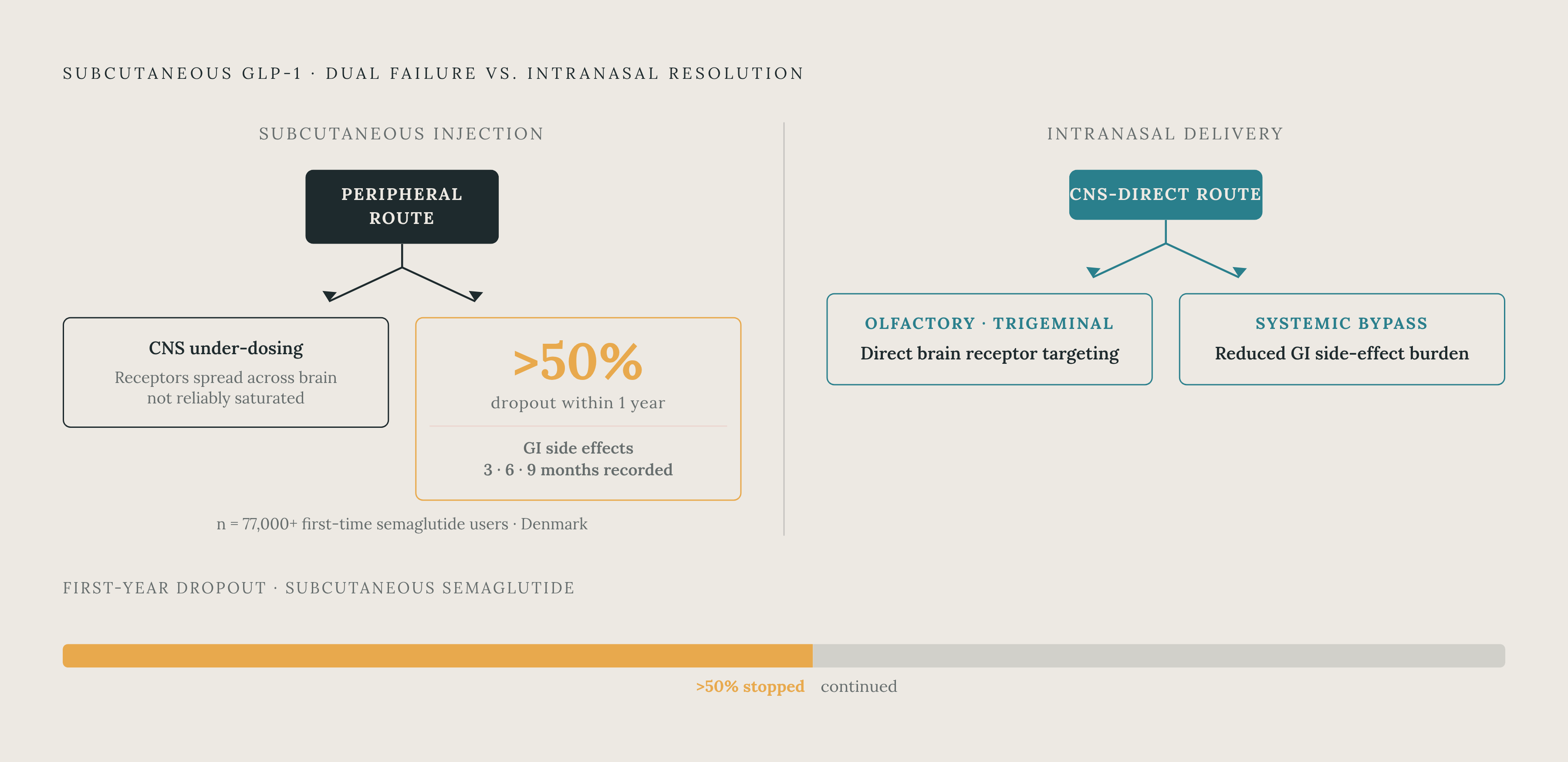
More than half of patients who start injectable GLP-1 therapy stop taking it within a year. The dropout reflects a failure of the delivery paradigm asking patients to tolerate it, and that gap between biological promise and patient retention is what gives the intranasal field its commercial urgency alongside its scientific one.
The dropout pattern is both early and consistent. A Danish population study tracking more than 77,000 first-time semaglutide users found substantial discontinuation at three months, at six months, and at nine months, with more than half of users stopping within the first year. The gastrointestinal side effects that push patients to quit come from the same subcutaneous route that caps CNS concentration: one delivery choice produces two separate failures at once, inadequate brain exposure and intolerable peripheral side effects.
An intranasal route built to target the respiratory epithelium would address the dropout mechanism and the concentration gap at the same time. It would avoid hepatic first-pass metabolism, reduce the systemic side-effect burden responsible for much of the GI distress patients report, improve the odds that patients stay on treatment, and bypass the blood-brain barrier through the olfactory and trigeminal pathways described earlier. One formulation strategy could, in principle, attack both the nausea that drives patients away and the CNS concentration gap that may explain why EVOKE came back null.
What the nanoparticle platform approach offers beyond GLP-1
The mucoadhesive nanoparticles, lipid carriers, and precision deposition devices being engineered for intranasal GLP-1 delivery are not built around GLP-1 specifically. They are cargo-agnostic infrastructure, capable in principle of carrying any peptide or biologic through the same olfactory and trigeminal pathways described throughout this piece. That is the quiet significance of the GLP-1 push: every engineering gain made in service of one molecule becomes a proof of concept available to the next.
King's College London's July 2025 work delivering acyl-ghrelin via intranasal gold nanorods demonstrates the same point from a different angle: a neuroprotective peptide, biologically adjacent to GLP-1, carried successfully by the same nanoparticle class being developed for metabolic and neurodegenerative applications.
The indications this infrastructure could eventually reach extend well past any single disease. Alzheimer's and Parkinson's disease both have a plausible GLP-1 receptor mechanism behind them, one that subcutaneous delivery has so far failed to translate into controlled clinical proof. Acute neurological emergencies and chronic neurotrauma sit in a separate branch entirely, and Oragenics has already flagged this territory as a target for its ONP-002 platform once concussion data are in hand.
The market is positioning around this as a platform opportunity. Roots Analysis projects that the nasal drug delivery market will reach roughly $27 billion by 2035, with biologics marked as a distinct growth segment within that figure, and Aptar's acquisition of SipNose's technology assets shows that an established delivery-systems company sees the same platform logic playing out at the device layer. None of this means the work is finished. What the GLP-1, concussion, and neuroprotective peptide programs share is a common engineering foundation, built one indication at a time, toward a route into the brain that the body did not leave open by accident.