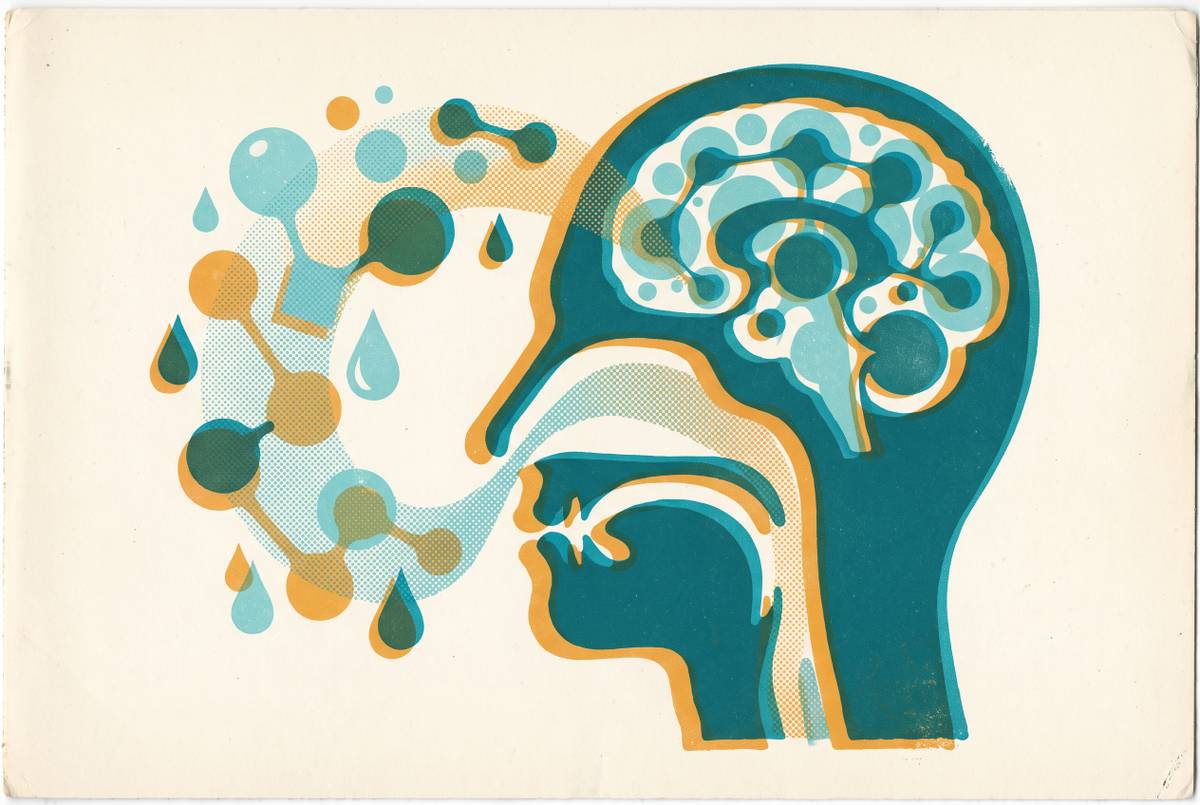
Intranasal Insulin Delivery Lessons for GLP-1 Formulation
Insulin's nose-to-brain pathway offers a tested model for intranasal GLP-1 development.
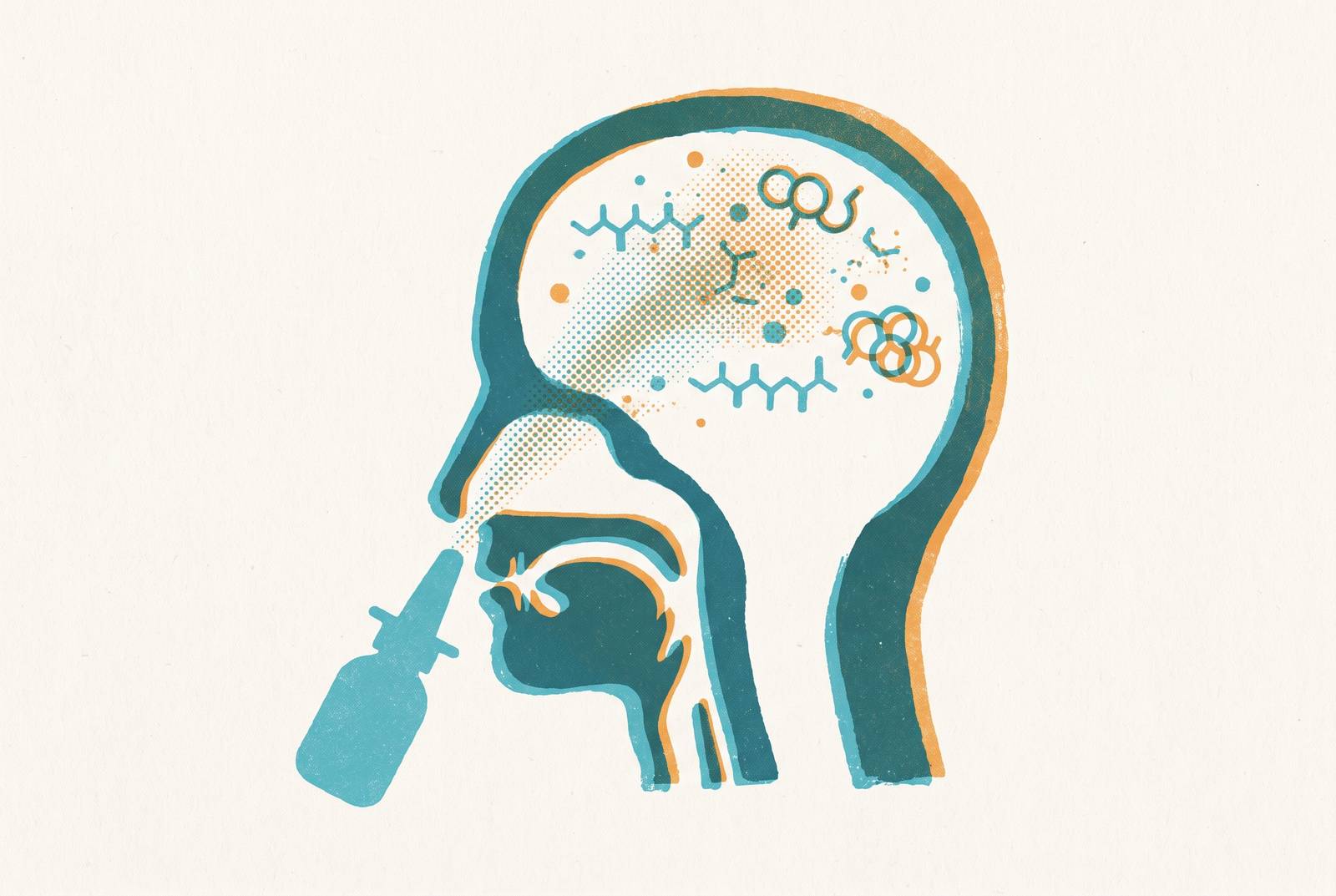
Intranasal GLP-1 formulation has an unusually instructive precedent in a decade of intranasal insulin research. That work has tested peptide protection, mucosal transport, brain delivery and device usability, giving formulation scientists a practical starting point. Its central lesson is that the route is credible, but transferring it to GLP-1 requires molecule-specific and population-specific validation.
Why injected GLP-1s lose patients before the biology can work
A peptide cannot do its intended work if patients stop taking it. For injected GLP-1s, the burden of administration and gastrointestinal adverse events make persistence a delivery problem as well as a pharmacological one. Subcutaneous injection puts the peptide into systemic circulation, exposing peripheral GLP-1 receptors in the gut rather than selectively reaching central appetite targets. That exposure helps explain why a higher dose can cause more nausea.
The resulting dose paradox is straightforward. Lower doses can be tolerable but underpowered, while escalation brings the gastrointestinal effects that drive discontinuation. Oral delivery changes the administration burden but introduces peptide degradation and first-pass hepatic metabolism, leaving very low bioavailability and a need for much higher doses. Data on what patients prefer show interest in non-injectable, non-oral options, including a nasal route. If delivery contributes to dropout, a better route is a legitimate engineering target, and insulin research gives that proposition an empirical foundation.
How the nasal route bypasses the barriers that defeat oral and injectable peptide delivery
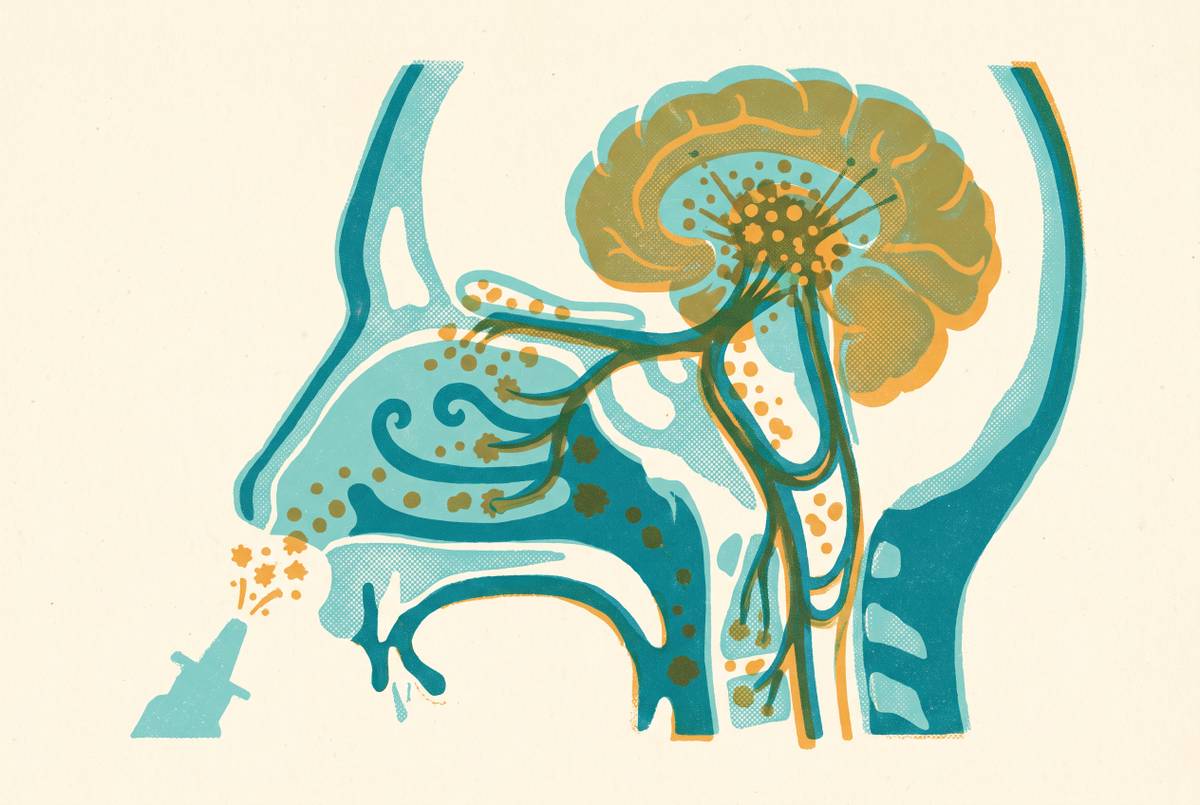
The nasal cavity contains two functional zones with different delivery implications. The olfactory epithelium in the upper cavity provides a direct portal toward the central nervous system. The separately vascularized respiratory epithelium covering the turbinates supports systemic absorption. Where a formulation lands helps determine which route it takes.
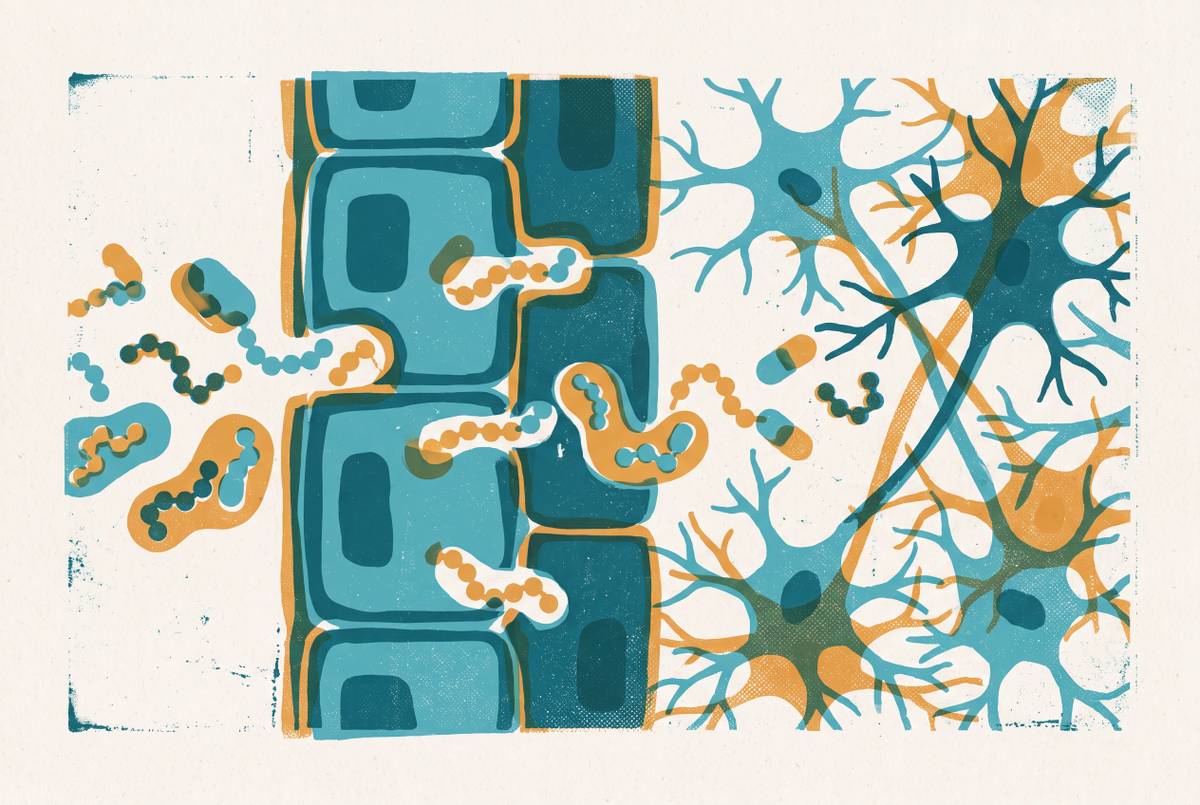
Transport from the nasal epithelium toward the olfactory bulb can proceed through intracellular, extracellular and perivascular pathways across the cribriform plate. This access sidesteps the blood-brain barrier rather than requiring a peptide to penetrate its tight junctions and active efflux systems. It also avoids the acidic gastric environment and hepatic first-pass metabolism that constrain oral peptide delivery. For GLP-1, preferential CNS delivery could limit the peripheral receptor exposure associated with nausea. That mechanistic possibility requires validation as a tolerability benefit for intranasal GLP-1, and its first test is whether a fragile peptide actually reaches the brain.
What a decade of intranasal insulin research confirmed about nose-to-brain peptide transport
Wake Forest University School of Medicine addressed that question directly in 2025. Its first-in-human PET study used [68Ga]Ga-NOTA-insulin and a specialized six-spray nasal system to image delivery in 16 older adults. The study found elevated insulin uptake in 11 brain regions associated with memory and cognition, including the hippocampus, olfactory cortex, amygdala, and temporal lobe. This changed the evidentiary basis of intranasal insulin development.
The imaging also showed that successful delivery was not uniform across participants. Cognitively normal individuals had higher uptake and different timing patterns from people with mild cognitive impairment, who showed rapid initial uptake followed by quicker clearance. Disease state therefore belongs in the delivery model. The same protocol also gives developers a way to investigate target exposure before asking a therapeutic trial to explain both delivery and outcome.
For GLP-1 scientists, the significance is broader than insulin’s destination in any single region. A peptide of comparable size and fragility reached multiple brain targets through nasal administration. That validates the route as a credible option for this drug class, although it does not establish the distribution of every peptide placed in a nasal device. The transferable achievement is both biological and methodological, namely demonstrated transport and a means of measuring it.
What clinical trials of intranasal insulin showed about therapeutic effect and device compliance
Wake Forest University School of Medicine’s 2025 clinical trial moved from target exposure to measurable therapeutic signals. It randomized 47 older adults with mild cognitive impairment, early Alzheimer's disease, or cognitively normal with amyloid positivity to intranasal insulin, empagliflozin, both, or placebo over four weeks. People who took intranasal insulin did better on tests that can pick up early changes in memory and thinking. Brain imaging showed that white matter connections had greater structural integrity and that blood flow patterns had changed in regions key to memory. Treatment also reduced plasma GFAP, a marker of astrocyte dysfunction elevated in Alzheimer's disease.
These findings matter to delivery scientists because they connect nasal administration with effects beyond the moment of absorption. They do not, however, turn a short trial into evidence of durable benefit or establish an outcome for GLP-1. Their narrower contribution is to show that CNS-directed nasal peptide delivery can produce measurable clinical and biological signals.
Usability supplied another important result. People in the study found the nasal insulin device easy to use, and compliance stayed exceptionally high throughout the study. Older adults, including people with cognitive impairment, were able to use the device consistently.
The formulation engineering problems insulin research stress-tested — and what it found
Clinical feasibility does not remove the barriers at the nasal surface. Proteolytic enzymes can degrade a peptide before absorption, while mucociliary clearance moves deposited material toward the nasopharynx within minutes. Any drug left after those processes must still cross the epithelial barrier. Insulin research has tested carrier designs against each of these barriers and measured how well the formulations meet those needs.
The 2026 PNPHO thermoresponsive nanocarrier study demonstrated high insulin encapsulation efficiency and protection from enzymatic degradation. Its nanoparticles measured 35.9 to 49.8 nm, with low polydispersity and negative surface charges. They maintained structural integrity over a four-week stability study. Those results provide concrete size, charge and stability benchmarks that require validation for a GLP-1 formulation.
Mucoadhesive properties slowed transport across nasal cells at first, but then more insulin crossed the cells and kept doing so. In mice, the nanoparticles prolonged nasal retention and increased the brain-to-serum ratio compared with insulin alone. The study also found that transport across blood-brain barrier cells increased with time compared with insulin alone, helping the drug cross another barrier on some transport pathways.
Related GLP-1 experiments show that this engineering work is already crossing peptide boundaries. Penetratin co-administration substantially increased nasal GLP-1 absorption, with experiments also involving exendin-4 and interferon-β. Chitosan-based thermoresponsive hydrogel systems have been studied for GLP-1 receptor agonists, including exenatide in a chitosan/glycerophosphate thermogelling system. These are experimentally tested approaches to protection, retention and permeation. They give developers a problem set with demonstrated answers.
What device engineering for intranasal insulin revealed about deposition, dosing accuracy, and patient variability
A carrier can protect a peptide without putting it in the right place. Suman and Ghandi’s Aptar work in 2025 identifies how formulation properties and device engineering jointly shape deposition in the upper nasal cavity. Actuator geometry, spray angle, droplet size, and delivery volume each affect where the drug lands. Drug placed in the upper cavity can reach the olfactory route more readily, while drug that lands lower down around the turbinates is more likely to undergo systemic absorption. The device is therefore part of the targeting system.
Under-delivery risks inadequate CNS exposure, while over-delivery risks systemic exposure and peripheral receptor activation. The absorption differences documented in the insulin PET study make that balance population-dependent. A nominally precise dose is not necessarily a uniform brain dose. Device dosing design must therefore account for the relationship between deposited drug and subsequent uptake.
Translation adds another constraint because rodent nasal anatomy permits olfactory coverage that standard human sprays may not reproduce. Direct instillation in a rodent cannot establish how a person will distribute the same formulation through a device. The insulin trial’s high feasibility and near-perfect adherence also show that a device must be easy to use each day while placing the drug precisely. Otherwise, engineering a better exposure profile would leave the original persistence problem unresolved.
Why GLP-1 peptides face the same formulation barriers insulin already solved, and where they diverge
Insulin and GLP-1 are both protease-susceptible peptides with negligible oral bioavailability, so protection from degradation is a shared requirement. Both have brain targets accessible through olfactory and trigeminal pathways. Thermoresponsive carriers, chitosan-based hydrogels and cell-penetrating peptide strategies therefore have a clear rationale beyond insulin alone. Upper-cavity targeting and accurate dosing are likewise relevant regardless of the peptide payload.
Yet a common barrier does not imply an interchangeable formulation. Longer-acting therapeutic GLP-1 analogues are larger and more structurally complex than native GLP-1, making the selected molecule a determinant of carrier design. Insulin’s particle-size and encapsulation benchmarks may need recalibration for that analogue. Development must establish whether a chosen carrier protects, retains and releases that particular peptide as required. The insulin precedent defines the experiment more clearly without supplying its result.
Brain distribution also needs a fresh answer. GLP-1 targets include hypothalamic appetite regulation and wider circuits involved in reward, addiction, and neuroinflammation, beyond the hippocampal-amygdalar focus of much insulin work. That broader target distribution may require different deposition strategies. Absorption variability in metabolic disease or neurological populations must also be measured independently of insulin studies. GLP-1-specific tracers can adapt the PET validation method, while the unresolved rodent-to-human anatomical gap remains a shared constraint.
The neurological case for intranasal GLP-1 delivery that injection-based administration cannot make as well
GLP-1 receptors are found in brain regions involved in impulse control, reward, and addiction, so direct CNS access has a rationale beyond appetite regulation. For an indication governed by brain receptor occupancy, plasma concentration is not the same endpoint. Subcutaneous administration distributes drug systemically and relies on partial blood-brain barrier penetration for central effects. Nasal delivery offers access at the olfactory interface, so it can be designed to bring the drug to the brain.
A large longitudinal cohort of individuals with type 2 diabetes associated GLP-1 receptor agonist use with reduced dementia incidence. Anti-inflammatory and neuroprotective mechanisms across models of neurodegenerative disease provide biological context for that association. Neither the association nor those models demonstrate a benefit from intranasal GLP-1. No human clinical data yet establish its efficacy or safety.
Wake Forest’s 2025 trial found effects on proteins involved in the nasal-olfactory plexus, which connects the brain’s waste-clearance system with immune systems throughout the body. That finding illustrates a CNS-immune interaction accessible through nasal delivery. It strengthens the case for testing central exposure directly.
What formulation scientists working on intranasal GLP-1 should take from the insulin precedent
The first step is to adapt these approaches to a chosen peptide and its target in the brain. Thermoresponsive nanocarriers in the sub-50 nm range, chitosan-based hydrogels and cell-penetrating peptide co-administration offer experimentally supported starting points. Carrier selection should be paired with device design from the outset, with deposition geometry treated as a primary variable. Human nasal cast studies belong early in development because rodent deposition alone cannot establish human olfactory access.
The next priority is to make exposure visible. An analogous peptide-specific radiotracer would extend the Wake Forest PET approach to the selected molecule and its intended brain regions. Early trials should stratify by relevant patient variables, including metabolic status, sex, and disease stage, to account for absorption variability. This follows the insulin field’s evidence of disease-state and sex-related dosing differences without presuming their magnitude for GLP-1. Delivery validation can then inform therapeutic testing instead of leaving an ambiguous outcome to carry both questions.
The strategic opportunity is a peptide delivery platform. Mucoadhesive, thermoresponsive, protease-protective carriers address barriers shared by other peptides and neurological targets. Investment in that architecture can therefore extend beyond one GLP-1 analogue. Insulin research has already narrowed the uncertainty to specific formulation, deposition and population questions. The GLP-1 field’s task is to answer those questions for its own molecules.
Sources
- New Study Validates Insulin Nasal Spray to Deliver Alzheimer’s Drug Directly to the Brain
- Intranasal Drug Delivery in Neuropharmacology: Advances in Brain-Targeted Therapies and Bioethical Challenges
- New Trial Finds Diabetes Drug and Nasal Insulin Improve Brain Health in Early Alzheimer's Disease
- Nose to brain delivery of insulin loaded in PLGA and chitosan-coated PLGA nanoparticles: A promising approach for Alzheimer's disease therapy - ScienceDirect
- Repurposing insulin for Alzheimer’s disease treatment: intranasal delivery of a thermoresponsive nanocarrier-based insulin formulation to the brain