Mucociliary Clearance as a Barrier to Nasal Drug Absorption
Mucociliary clearance gives drugs only ten to twenty minutes to cross the nasal barrier.

The respiratory tract is not a passive surface for drug deposition. It is an actively defended interface, and the mechanism that defends it, mucociliary clearance, is the most consequential obstacle to nasal drug absorption. Understanding that mechanism in precise operational terms defines the engineering problem that nasal peptide delivery must solve. The challenge is substantial, but it is no longer categorical.
What Mucociliary Clearance Actually Does and Why It Exists
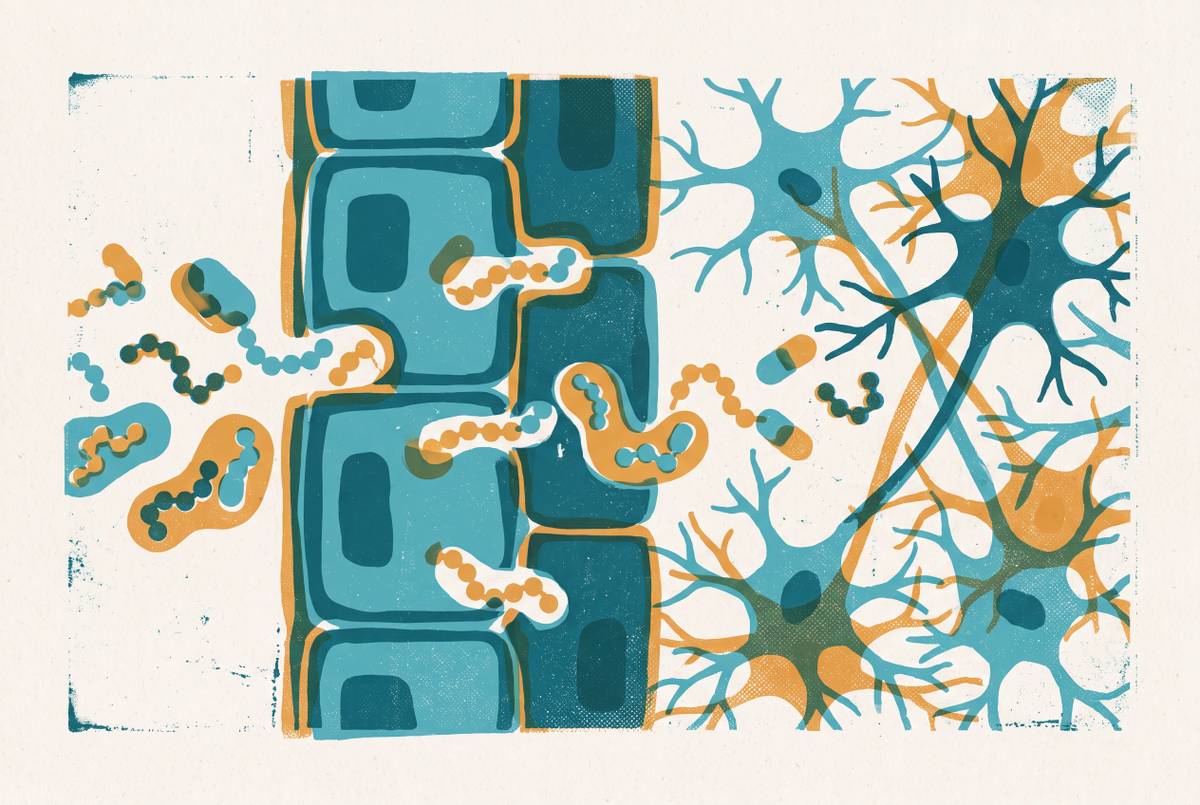
Mucociliary clearance is the respiratory tract's primary innate defense mechanism. Its function is continuous and simple in purpose: to sweep inhaled pathogens, pollutants, and particles out of the nasal cavity. The system evolved to protect the airway, and it does so without discrimination.
The nasal mucosa is lined with a viscoelastic mucus layer. Coordinated ciliary beating transports that layer, and anything trapped within it, posteriorly toward the nasopharynx. The mucus layer itself has a total height of roughly 5 µm и moves at an average velocity of 5 mm per minute, as reported by Modaresi and Shirani in 2023. But the distances involved in crossing an epithelium are measured in micrometers, and the mucus layer covers that distance fully.
The more consequential fact is temporal. The system renews the mucus layer roughly every 10 to 20 minutes. That is the window a drug has to cross the epithelium before it is physically removed. The system is continuously active, and any molecule that cannot traverse the epithelium within that brief interval is swept away before absorption can occur. This is not a defect in the design. It is the design working exactly as intended.
How the Three-Layer Barrier Compounds the Clearance Problem for Large Molecules
Nasal drug absorption faces not one barrier but three simultaneous ones. The first is temporal: the 10-to-20-minute mucus renewal window sets an absolute residence-time ceiling. The second is physical: the viscoelastic mucus gel traps particles, and Balázs and Mall showed in 2025 that this mucus layer forms an important barrier for pharmacological targeting of the epithelium in airway drug delivery. The third is molecular: low epithelial permeability for hydrophilic macromolecules. For peptide biologics like GLP-1 receptor agonists, all three act at once. That simultaneity is what makes the barrier so punishing.
The molecular barrier is particularly unforgiving. Nasal mucociliary clearance is inversely proportional to drug bioavailability. The relationship is not merely directional. For large, hydrophilic peptides, Alwali and colleagues note in the June 2026 issue of the International Journal of Pharmaceutics: X that intranasal delivery faces poor nasal mucosal permeability, rapid clearance, short residence time, and low bioavailability simultaneously.
Consider the scale of the problem numerically. A peptide must cross a 5-µm mucus layer before its replacement arrives in 10 to 20 minutes. And the delivery platform itself is constrained: only approximately 100 to 150 µL per nostril can be administered intranasally. That volume ceiling means achieving therapeutic drug concentrations depends on highly potent or highly concentrated formulations. The result is that a mechanism evolved to defend the body against invasion applies the same rigor to a therapeutic molecule placed there deliberately.
Why the Nose-to-Brain Route Raises the Stakes Beyond Systemic Absorption
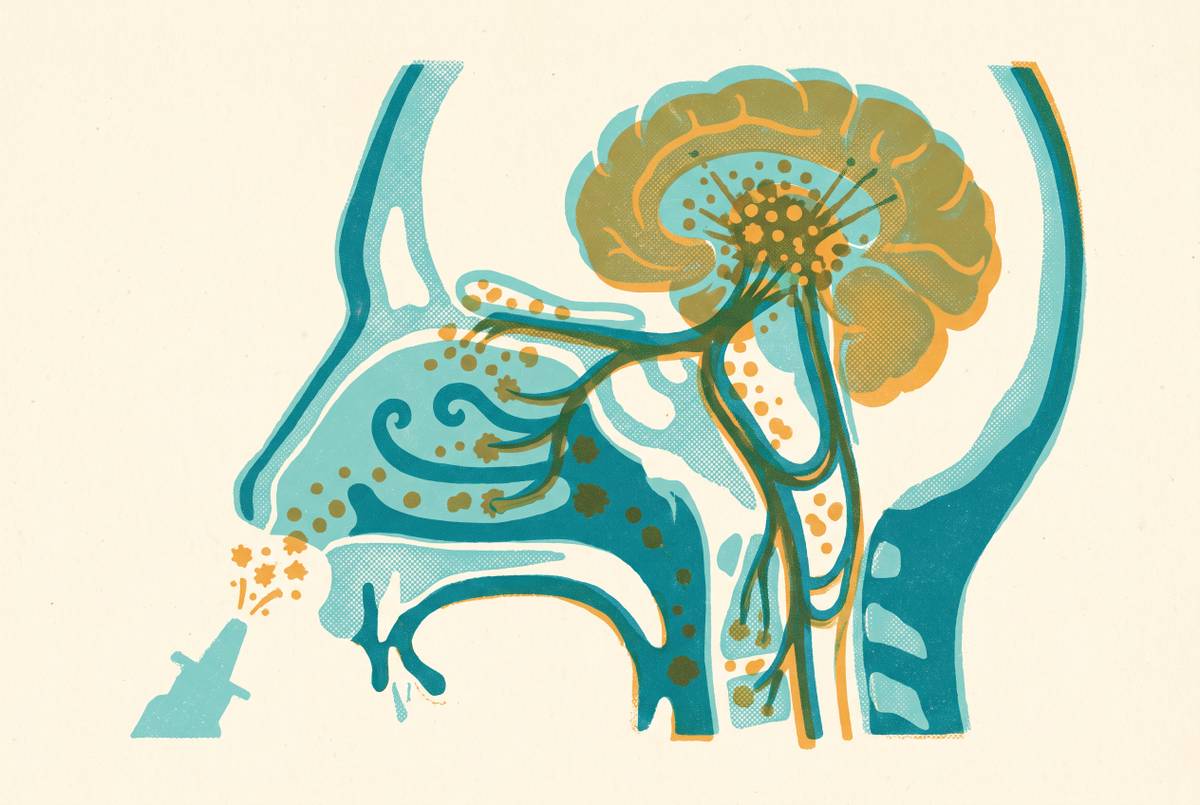
If mucociliary clearance could be reliably overcome, intranasal delivery would offer something a subcutaneous injection cannot: a direct pathway to the central nervous system that bypasses the blood-brain barrier. The stakes here are not merely improved bioavailability. They are about reaching targets that injections access poorly or not at all.
The mechanism is anatomical. The olfactory and trigeminal nerves connect the nasal mucosa directly to the brain, providing a route that avoids both hepatic first-pass metabolism and the blood-brain barrier, as Alwali and colleagues describe. Intranasal delivery, if clearance is overcome, could address both the barrier problem and the injection burden simultaneously. This is a hypothesis with substantial emerging evidence behind it, not an established clinical effect.
The preclinical data are suggestive. In animal models, intranasal GLP-1 receptor agonists including dulaglutide, exenatide, and the dual agonist DA4-JC showed widespread brain distribution within minutes of administration. Dulaglutide and DA4-JC showed their highest uptake in hippocampus and neocortex. The pattern matters: certain peptides concentrate in memory-relevant regions, others diffuse more broadly.
The most rigorous human validation to date came from a brain imaging study at Wake Forest University School of Medicine, published in July 2025. The study confirmed that intranasal insulin delivered via a simple nasal spray safely and effectively reaches key memory regions of the brain in older adults. It also revealed that people with early cognitive decline absorb it differently. The field's epistemic foundation now includes human data, which is a material shift from reliance on preclinical models.
Why Patient Dropout from Injectable GLP-1s Makes the MCC Engineering Problem Clinically Urgent Now
The engineering problem of mucociliary clearance has become urgent not because of an abstract pharmacokinetic puzzle but because of a documented patient-level crisis. The scale of GLP-1 dropout, driven largely by gastrointestinal side effects and injection burden, creates a structural argument for a delivery route that could deliver the same therapeutic molecules with lower systemic drug load and without needles. But the motivation is real and quantified.
Among first-time semaglutide users in Denmark, over half stopped within one year. The consequences are measurable: within a year of discontinuation, roughly half of patients were heavier than when they started. The therapy appears to require genuine lifelong adherence for sustained effect, and adherence is precisely what the current route fails to secure at scale.
The pattern of dropout is informative. Those patients were especially susceptible to nausea, vomiting, and diarrhea. This points to a specific mechanism of failure: the systemic load of the drug produces GI side effects that drive patients away. If an intranasal formulation could achieve therapeutically relevant GLP-1 exposure with lower systemic drug load, the GI side-effect burden might be substantially reduced. The dropout crisis creates the clinical motivation to solve mucociliary clearance. It does not yet demonstrate that solving it will work.
The Four Engineering Strategies Being Used to Extend Nasal Residence Time Against MCC
Four distinct strategies are in active development to extend nasal drug residence time against mucociliary clearance. Together they constitute a toolkit, not a ranking. Their diversity signals that the field has not converged on a single answer, and that the barrier is being engaged on multiple fronts simultaneously.
The first strategy is viscosity modulation. As drug solution viscosity increases, nasal mucosal adhesion time is prolonged. The mechanism is blunt but effective: make the formulation difficult for the cilia to move, and it stays in place longer.
The second approach is in situ gels. These are formulations that are liquid at room temperature but gel on contact with the nasal mucosa. The gelation mitigates clearance by increasing residence time, addressing a key limitation of conventional aqueous nasal sprays or drops, as Alwali and colleagues note in their June 2026 review. The elegance lies in the transition: a liquid is easy to administer as a spray, but a gel resists clearance once it forms.
The third strategy is microneedles. Microneedles for active intranasal administration hold promise for physically overcoming both mucociliary clearance and the nasal mucosal barrier to enhance brain delivery. This approach does not attempt to slow clearance or adjust viscosity. It bypasses the surface entirely, creating a physical path through the barrier rather than a chemical negotiation with it.
A spatial nuance deserves attention alongside these formulation strategies. The nasal sinuses, where airflow velocity is lower, naturally increase particle residence time. Mucociliary clearance inside the sinuses controls airflow and can increase drug residence time, thereby enhancing absorption efficiency, as Modaresi and Shirani observed in 2023. Where a particle lands may determine how long it stays, independent of what the particle is made from.
The Safety Constraint That Makes MCC Engineering a Double-Edged Problem
The most effective approaches to overcoming mucociliary clearance also risk impairing the ciliated epithelium they rely on. Engineering for absorption cannot ignore the biological function being disrupted. This is the central tension in the field: the tools that work best against clearance are the ones most likely to damage the defense mechanism itself.
Certain nanocarrier components may impair the function of the nasal ciliated epithelium, which is essential for normal clearance and serves as the body's defense against pathogens. Toxicity data on commonly used excipients, particularly regarding long-term effects on the nasal mucosa, remain limited. The field is engineering toward a barrier without a complete map of the long-term consequences of repeated engagement.
Absorption enhancers present a sharper concern. Surfactants and tight junction modulators carry safety risks due to potential irreversible alteration of the epithelial cell membrane. To date, no safe absorption enhancer for pulmonary administration of drugs has translated into commercial products, as Ghadiri and colleagues noted in 2019.
The design implication follows from this constraint. Effective strategies must be targeted and reversible, not broadly disruptive. That is precisely the property that engineered nanoparticle platforms, with tunable surface chemistry and size, are better positioned to achieve than small-molecule enhancers. A nanoparticle can be designed to interact with mucus in a specific, tunable way, and to release its payload without permanently altering the epithelium. The precision is not a luxury. It is the only design principle consistent with the safety requirement.
The Bioavailability Adequacy Objection and What It Actually Requires to Answer
The most serious objection to intranasal GLP-1 delivery is not mucociliary clearance itself but what follows from it. Even if residence time is extended, achieving therapeutically adequate systemic or central nervous system exposure for a large, hydrophilic peptide through a volume-limited nasal cavity may be pharmacokinetically implausible without absorption enhancers that carry their own toxicity burden. This objection must be stated fairly, because it is the strongest argument against the entire enterprise.
The numbers underpin the objection. GLP-1 peptides are large and hydrophilic, two properties that intrinsically limit nasal epithelial permeability. The 100 to 150 µL per nostril volume ceiling means that achieving the same systemic exposure as a weekly subcutaneous injection through a nasal spray may require highly concentrated formulations or potent absorption enhancers. Enhancers risk epithelial damage.
Landmark Medicines Ltd. in the UK acknowledged this directly in September 2026. The company announced that its planned human volunteer study will initially focus on pharmacokinetics, systemic bioavailability, dose requirements, safety, and tolerability, and that these data will determine whether nasal administration can offer meaningful advantages over existing delivery approaches. The company is not claiming the objection is solved. It is designing a study that will answer the objection.
A secondary structural objection concerns the routes themselves. The trigeminal pathway appears to be the dominant route for intact nanoparticles, while the olfactory pathway more likely delivers substances already released from nanoparticles. Particle engineering choices therefore involve a trade-off between central nervous system targeting efficiency and systemic absorption. Optimizing for one may undermine the other. This is not a reason to abandon the approach, but it is a constraint that formulation design must address explicitly rather than ignore.
The answer to the objection is not dismissal but correct framing. Preclinical pharmacokinetic data from Aptar Pharma's powder and liquid semaglutide formulations, disclosed in May 2026 patent filings, showed substantial improvement in systemic peak blood concentration compared with a comparable oral dose in a preclinical model. Whether it can be narrowed enough for clinical equivalence to injection is exactly what the human studies now underway will determine.
Where the Field Stands as of Late 2026 and What the Commercial Programs Reveal About the Problem's Solvability
The convergence of human translational proof-of-concept for nose-to-brain peptide delivery and multiple dedicated GLP-1 intranasal programs entering active development in 2025 and 2026 signals a phase shift. Mucociliary clearance is now being treated as a solvable engineering problem, not a categorical barrier. The evidence for this claim is not a single breakthrough but a pattern of commercial and scientific activity.
Landmark Medicines Ltd. announced in September 2026 plans to advance its proprietary nasal drug-delivery platform toward a human volunteer study, with GLP-1 receptor agonists selected as the initial therapeutic application. The platform is formulation-agnostic across different active pharmaceutical ingredients and is the subject of multiple patent filings. The company intends to investigate the nose-to-brain pathway separately from systemic nasal absorption as the platform matures, which suggests a deliberate sequencing of questions rather than an attempt to solve everything at once. The filings describe spray-dried and powder processing technologies, and the preclinical pharmacokinetic data show meaningful improvement in systemic peak blood concentration over a comparable oral dose. MetP Pharma AG in Switzerland announced in January 2026 that its MetP enabling technology creates a new brain-targeted GLP-1 opportunity, following a July 2025 announcement that the technology unlocks intranasal delivery of semaglutide and other brain-targeting peptides.
The Wake Forest study of July 2025 remains the field's most rigorous human validation of nose-to-brain peptide delivery. Its significance is not that it proved a clinical effect but that it moved the evidentiary center of gravity from animal models to human imaging data. The questions the field now faces are human questions: dose response in the nasal cavity, long-term mucosal safety, individual variability in absorption.
For nanoparticle-based platforms specifically, the implication is precise. The programs now entering human studies will generate the pharmacokinetic and safety data that define what nanoparticle surface engineering must achieve. Decades of foundational nanoparticle intellectual property, the kind that enables tunable mucoadhesion, controlled release, and surface-charge engineering, separate platforms likely to navigate this contest from formulation approaches that cannot be systematically optimized. The work now is to design against it with the precision it demands.
Sources
- Intranasal drug delivery: Unlocking the nose-to-brain route for central nervous system therapies - ScienceDirect
- Don't forget the mucus barrier in pulmonary drug delivery!
- Strategies to Enhance Drug Absorption via Nasal and Pulmonary Routes
- Effect of mucociliary clearance on the particulate airflow inside the nasal sinus and its role in increasing the residence time and absorption of drugs inside the upper respiratory pathway - ScienceDirect